Start with the route, not the cable name
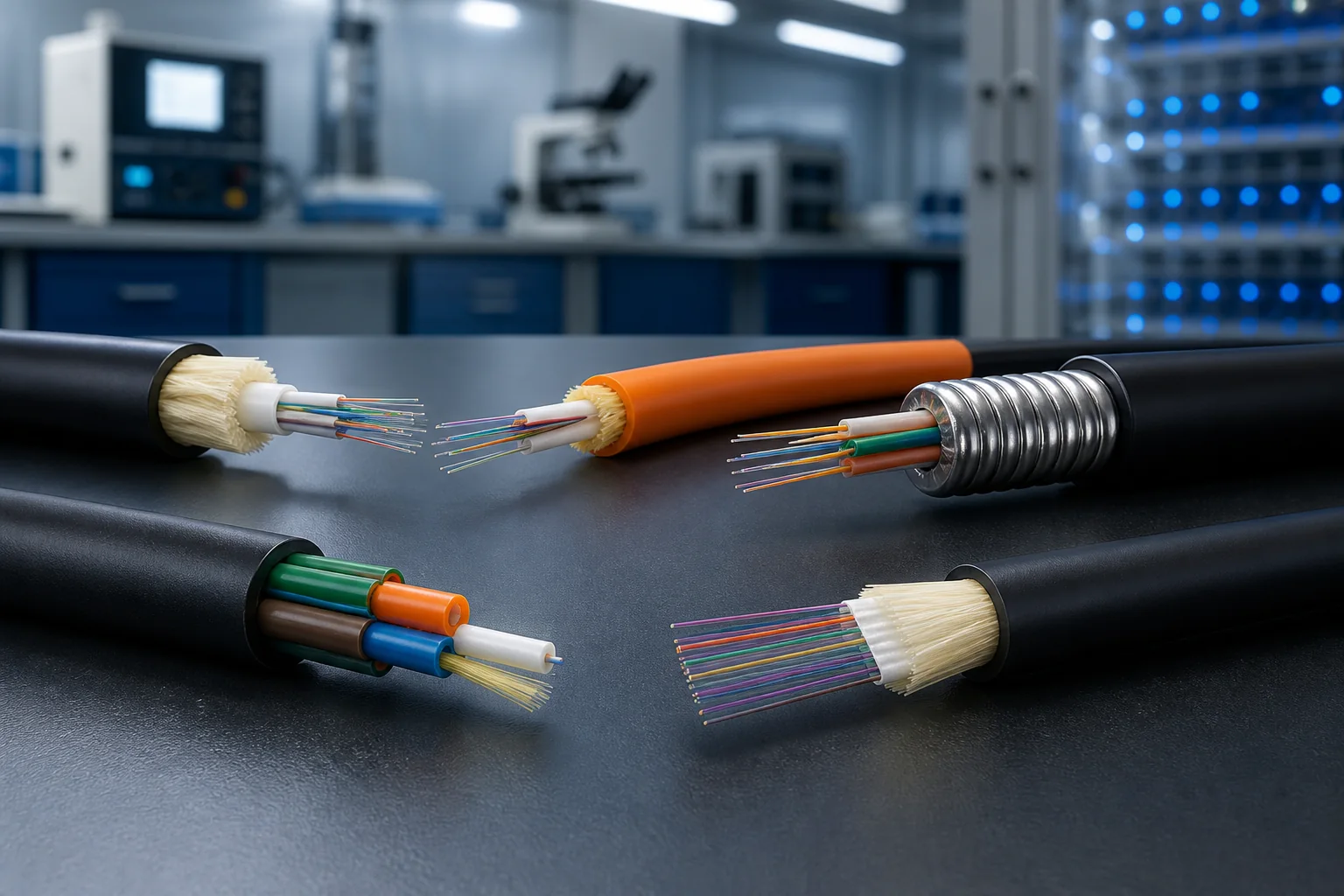
The most reliable way to select among fiber optic cable types is to describe the route first. A duct cable, direct-buried cable, aerial self-supporting cable, indoor distribution cable and FTTH drop cable may contain the same optical fiber but require very different mechanical protection. Route length, pulling or blowing method, water exposure, crush risk, rodent environment, flame rules, span loading and termination method all influence the construction.
This page explains how cable elements translate route requirements into a purchasing specification. It supports early selection; a final quotation should state the drawing, materials, rated loads, test limits, delivery length and evidence package for the exact product.
Common fiber optic cable families
| Cable family | Where it is considered | Questions to resolve |
|---|---|---|
| Loose-tube outdoor cable | Duct, lashed aerial, direct-buried or protected outside plant | Water blocking, tube layout, tensile load, crush, armor and sheath |
| Tight-buffered indoor cable | Building backbone, tray, riser and equipment-room pathways | Fiber access, flame/smoke requirement, pulling load and termination |
| Armored cable | Routes needing added crush or rodent protection | Metallic versus dielectric design, bonding/grounding and bend radius |
| ADSS cable | Self-supporting aerial routes and some power-utility environments | Span schedule, wind, ice, temperature, sag-tension and electric field |
| FTTH drop cable | Distribution point to subscriber, façade, duct or indoor drop | G.657 fiber, messenger, sheath, bend control and termination |
| Micro cable | Microduct and air-blown installations | Duct inside diameter, fill ratio, blowing distance and equipment |
How the cable construction protects the fibers
The core arrangement can be central-tube, stranded loose-tube, ribbon or tight-buffered. Loose tubes isolate fibers from part of the cable’s mechanical and thermal movement, while tight-buffered constructions can simplify indoor handling and termination. Ribbon designs can increase mass-splicing efficiency, but the splicing method, closure space and restoration practice must be planned.
Strength members carry installation and service loads. Aramid yarn, glass-reinforced plastic, steel wire and messenger elements serve different designs; the material name alone does not establish the rated tensile performance. Water-blocking yarn, tape or gel controls longitudinal water movement in suitable outdoor constructions. Armor may improve crush or rodent resistance, but metallic armor introduces electrical bonding and grounding considerations that a dielectric design avoids.
The outer sheath must match ultraviolet exposure, temperature, chemicals, flame and local installation rules. “LSZH,” “PE” or “PVC” is not enough by itself: the applicable performance class and test requirement must be defined for the project jurisdiction.
Route-to-construction selection checklist
| Route input | Resulting cable decision |
|---|---|
| Duct size and pulling plan | Cable diameter, weight, minimum bend radius, rated pulling load and delivery length |
| Direct soil exposure | Water protection, crush resistance, armor or conduit strategy and sheath durability |
| Aerial span | Self-supporting or lashed method, sag-tension data, wind/ice case and support hardware |
| Indoor pathway | Applicable fire/smoke classification, pathway fill, handling and termination access |
| Rodent or mechanical risk | Armor, glass yarn, conduit or route protection selected after risk review |
| Jointing plan | Fiber unit identification, closure capacity, splice method and restoration allowance |
Optical and mechanical data to request
Optical data should identify the fiber standard, attenuation limit and test wavelength. Mechanical data should distinguish installation loads from long-term service limits. Ask for nominal and tolerance values for diameter and weight, minimum bend radius during installation and operation, maximum tensile load, crush resistance, temperature range and any required impact, torsion, water penetration or environmental test.
The IEC 60794 series is a family rather than one universal cable certificate. The applicable product-family part and test method must be selected. The ITU-T optical fiber and cable standards guideline maps major ITU-T recommendations to related IEC work. For buying decisions, our IEC 60794 buyer guide explains why the part, edition, setup and acceptance limit belong in the order.
Illustrative pulling and attenuation checks
Suppose a proposed cable has a rated installation tensile load of 1,500 N and the route calculation predicts 900 N maximum pulling tension. The simple utilization is 900 ÷ 1,500 = 60%. This is a useful screening value, but it does not replace a pulling calculation that includes bends, friction, capstan effects, pulling grip, lubricant and equipment control.
For optical planning, a 20 km length at an assumed 0.35 dB/km contributes 7.0 dB before splice, connector and engineering allowances. Actual attenuation must come from the ordered fiber/cable requirement and the chosen wavelength. Calculated design values and measured acceptance values should be labeled separately.
Manufacturing and acceptance records
A useful cable data sheet connects the product code to a cross-section drawing, fiber count, unit identification, material description, dimensions and rated environment. A production record should preserve cable or drum identity, ordered length, marking, optical results and the required sampling or routine tests. Packaging review should include drum or reel size, gross weight, end sealing, pulling-end protection and destination markings.
Review our factory capabilities and certification records and quality assurance method. Commercial buyers can prepare an RFQ through the fiber optic cable manufacturer page or compare global terms on the supplier page.
Frequently asked questions
Is armored cable always suitable for direct burial?
No. Armor is only one element. Direct-buried suitability also depends on sheath, water protection, crush, installation method, local practice and the manufacturer’s declared application.
What is the difference between ADSS and messenger cable?
ADSS is an all-dielectric self-supporting construction. Messenger-supported designs use a separate or integrated support element. Each requires route-specific span and hardware review.
Can outdoor cable be installed inside a building?
Only if the construction and local code meet the building pathway requirements or the transition is made within the permitted entrance distance. Outdoor durability does not automatically satisfy indoor flame requirements.
What should be sent for a cable quotation?
Provide route, length, fiber type/count, construction preference, loads, environment, standards, drum length, reports, quantity, destination and schedule. If the construction is unknown, send the route data for a recommendation.