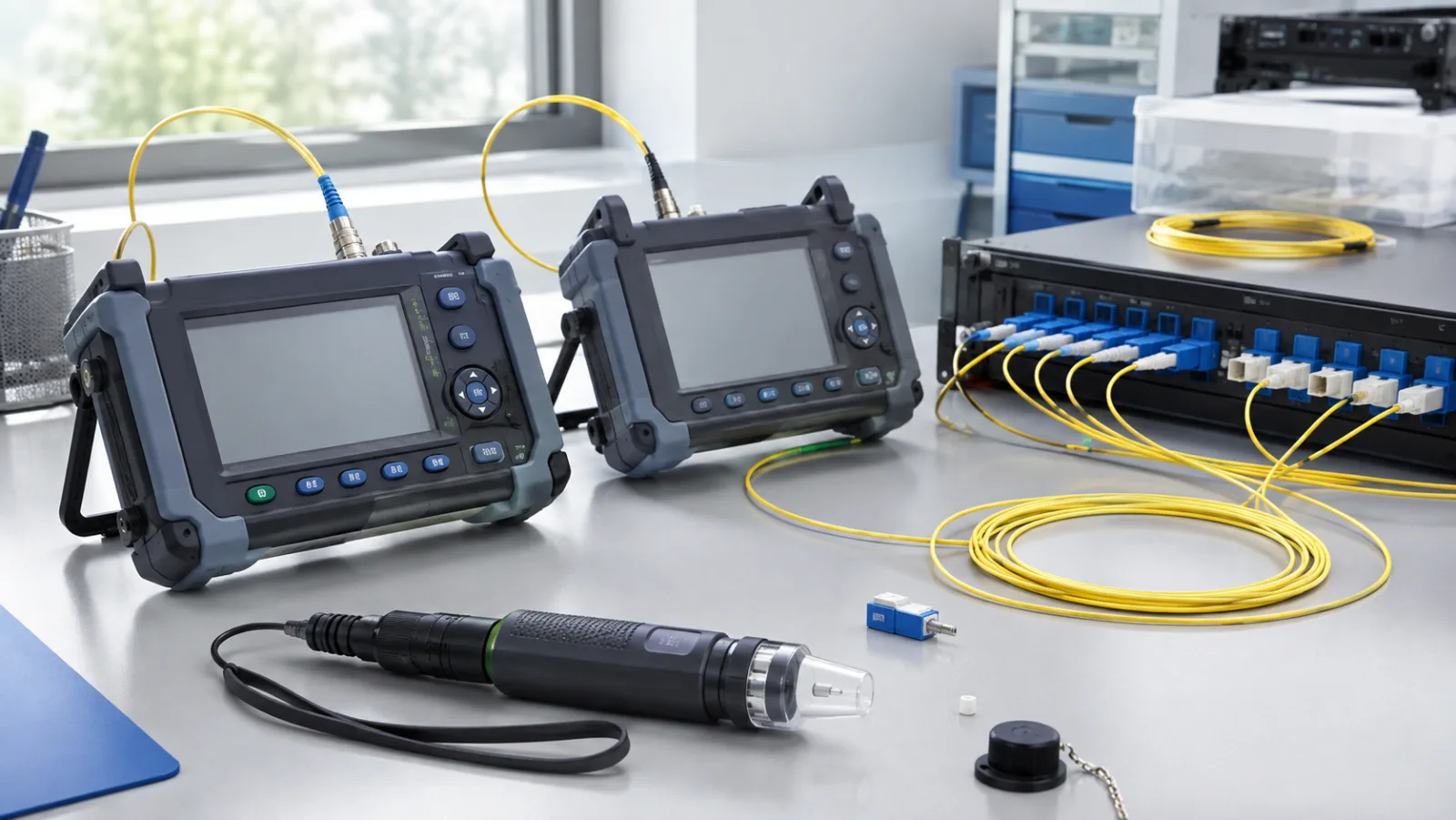
When you’re buying fiber optic cable for a critical network, you need confidence that it will perform for decades. That’s where IEC 60794 fiber optic cable tests come in. This international standard defines how optical fiber cables should be tested for mechanical, environmental, and transmission performance. As a buyer, you don’t need to run every test yourself, but you must know which ones are essential, how to interpret the results, and how to verify that your supplier’s claims are genuine. This article gives you a practical, engineering-focused guide to the IEC 60794 tests that matter most for your procurement decisions.

What Is IEC 60794?
IEC 60794 is a multi-part standard published by the International Electrotechnical Commission that specifies requirements for optical fiber cables. It covers everything from generic specifications (Part 1) to family specifications for indoor, outdoor, and submarine cables. The standard defines test methods, performance requirements, and acceptance criteria. For buyers, the most relevant parts are IEC 60794-1-1 (generic specification) and IEC 60794-1-2 (basic test procedures), which outline the mechanical, environmental, and optical tests that cables must pass.
Understanding the structure helps you ask the right questions. When a supplier says their cable “meets IEC 60794,” you should ask which specific tests were performed and what the results were. The standard is not a single pass/fail checklist; it provides a framework for testing, and the actual limits depend on the cable type and application.
Core Mechanical Tests: Tensile, Crush, Impact, and Bending
Mechanical tests simulate the stresses a cable experiences during installation and operation. These are the first tests you should verify because they directly affect cable reliability.
Tensile Strength Test
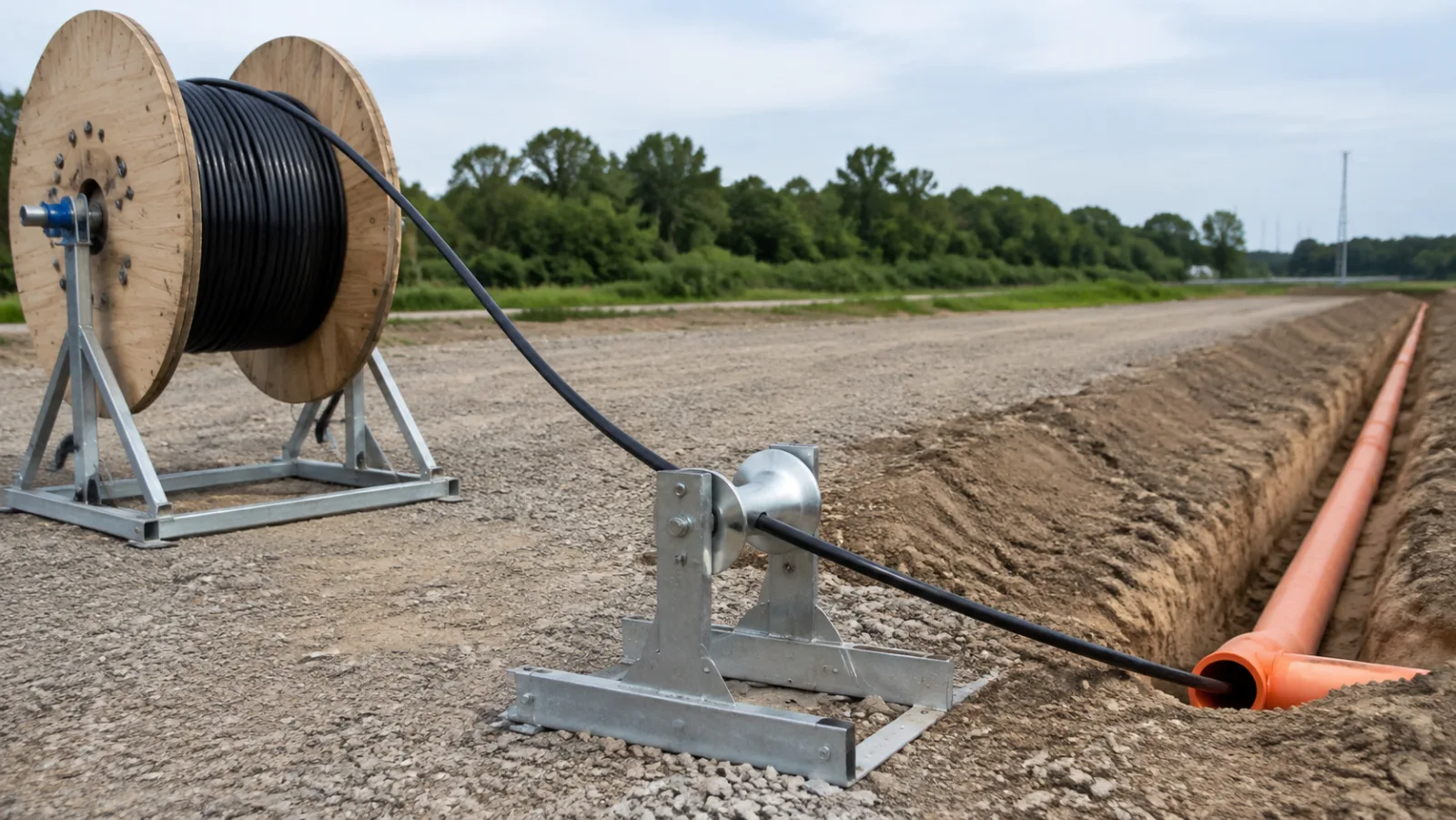
This test applies a pulling force to the cable to ensure it can withstand installation tension without excessive strain on the fibers. The standard specifies a maximum tensile load and a maximum fiber strain (often 0.5% or less). Typical values for outdoor cables range from 1000 N to 4000 N, but you must check the datasheet for your specific cable. The test verifies that the cable’s strength members (e.g., aramid yarn or steel) work as designed. During installation, you should never exceed the rated tensile load.
Crush Resistance Test
This test applies a compressive force to the cable to ensure it can withstand being squeezed, for example, when laid under a road or in a duct with other cables. The standard specifies a crush load (e.g., 100 N/cm or 200 N/cm) and checks that the attenuation change remains within acceptable limits. If a cable fails this test, it could cause micro-bending and signal loss. For direct burial applications, choose a cable with a higher crush rating.
Impact Test
This test simulates a sharp blow, such as a dropped tool or falling rock. A weight is dropped onto the cable from a specified height, and the cable must show no significant optical change. This is particularly important for outdoor and industrial cables. The test ensures that the cable’s protective layers (e.g., armor) are adequate.
Repeated Bending Test
This test bends the cable back and forth over a mandrel to simulate handling during installation and flexing in service. It checks that the fibers do not break and that attenuation remains stable. For patch cords and indoor cables, this test is critical. The number of cycles and the bend radius are specified in the standard.
Environmental Tests: Temperature Cycling and Aging
Environmental tests ensure the cable can operate in the temperature ranges and conditions of its intended environment. They are essential for outdoor cables exposed to heat, cold, and humidity.
Temperature Cycling Test
This test subjects the cable to multiple cycles of extreme hot and cold temperatures, typically from -40°C to +70°C. During each cycle, the attenuation is measured to ensure it stays within a specified change (often ±0.05 dB/km). This test verifies that the materials (jacket, buffer tubes, and fiber coating) expand and contract without causing micro-bends. If you’re deploying in a region with wide temperature swings, pay close attention to this test.
Damp Heat (Humidity) Test
This test exposes the cable to high humidity (e.g., 95% RH) at elevated temperatures for a prolonged period. It checks that moisture doesn’t penetrate the cable and cause hydrogen absorption or corrosion. For outdoor and underground cables, this is a key reliability test. The standard defines the duration and the allowable attenuation change.
Aging Test
Some cables undergo accelerated aging to predict long-term performance. This may involve elevated temperature for thousands of hours. The test ensures that the materials don’t degrade prematurely, which could lead to jacket cracking or loss of mechanical strength. While not all cable types require this test, it’s valuable for high-reliability networks.
Optical Tests: Attenuation and Bandwidth
Optical tests measure the transmission performance of the cable. They are the most direct indicators of signal quality.
Attenuation Test
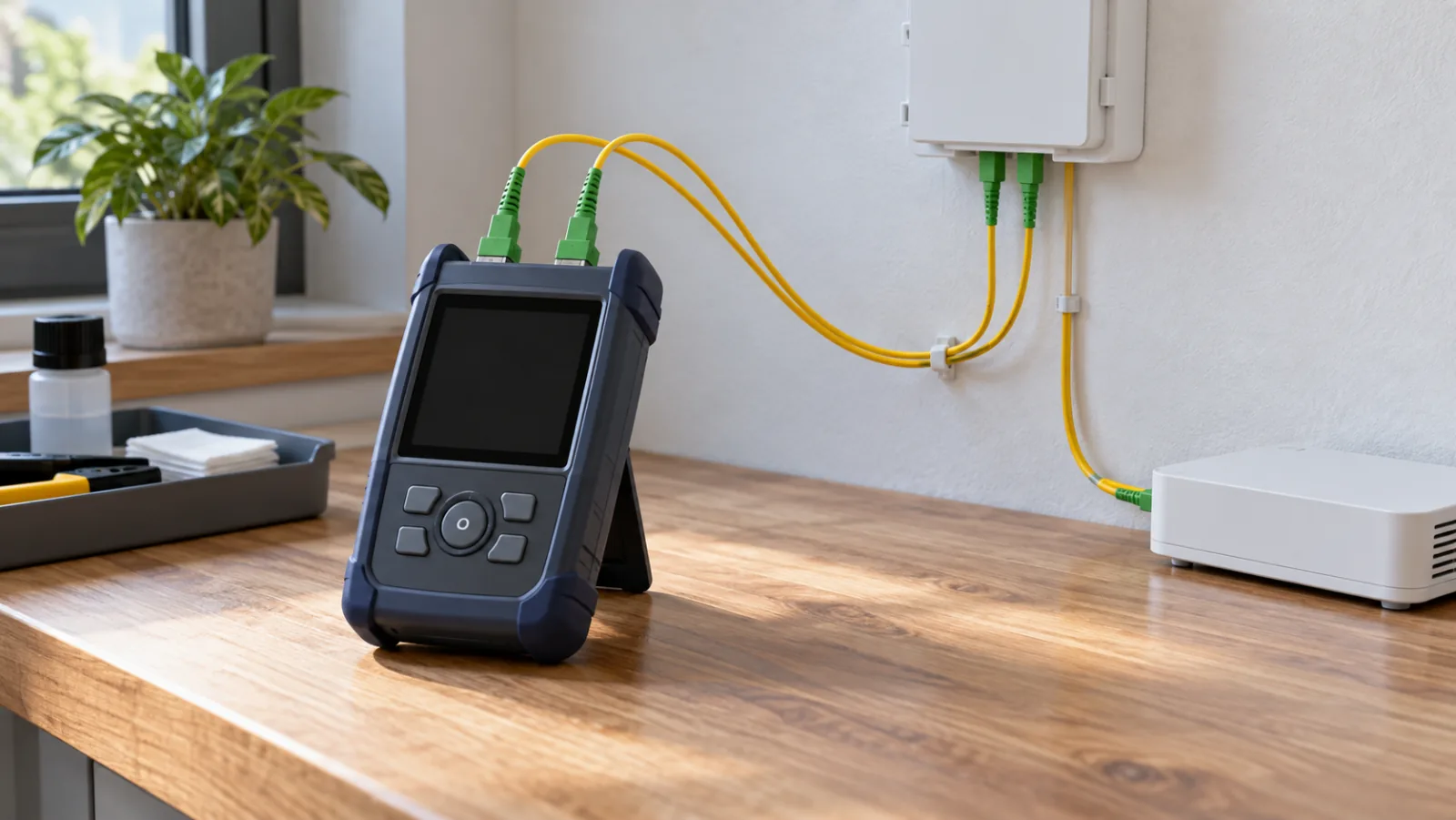
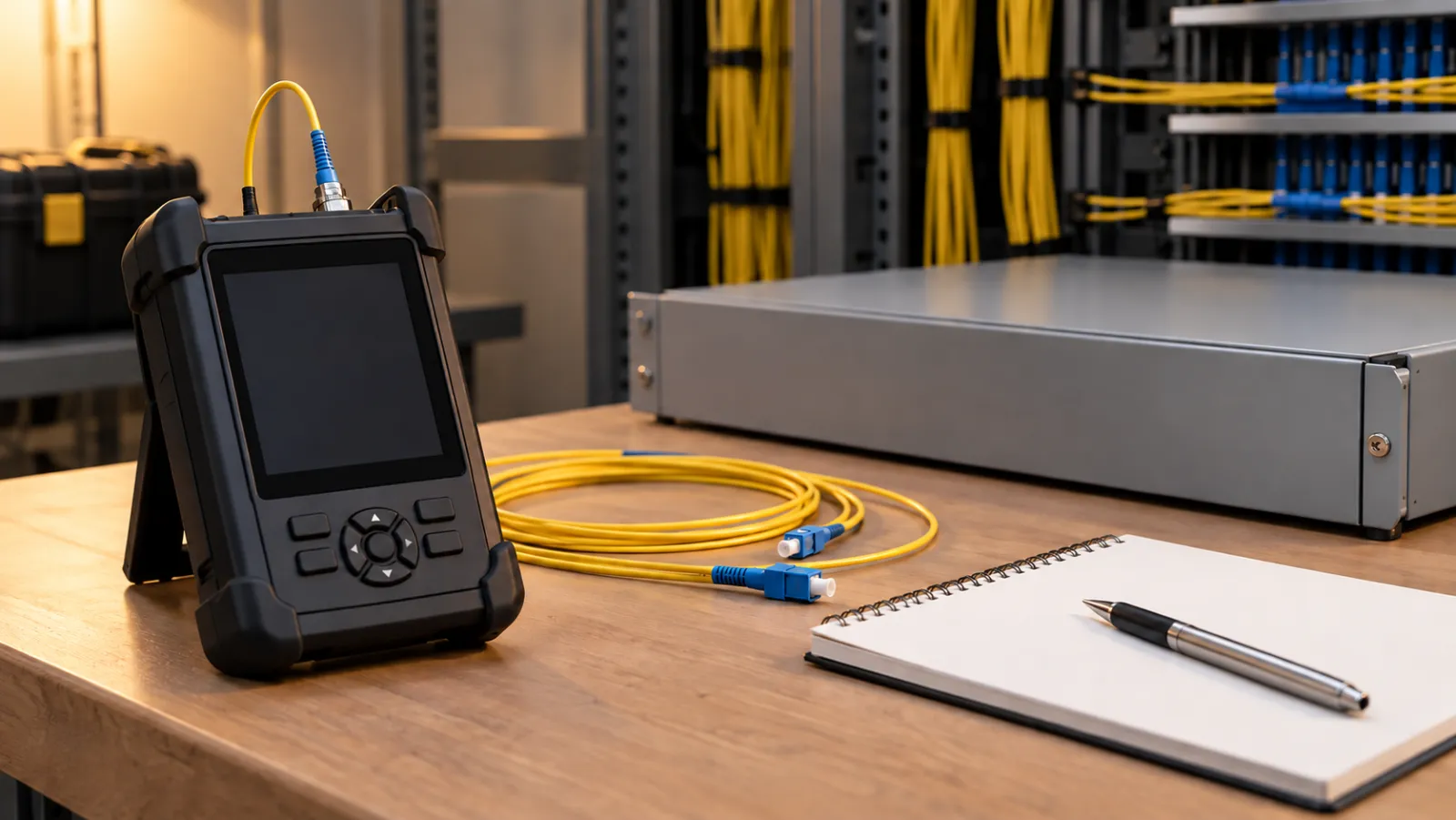
This is the most fundamental test. It measures the loss of optical power as light travels through the fiber. The standard specifies maximum attenuation coefficients for each wavelength (e.g., ≤0.4 dB/km at 1310 nm and ≤0.3 dB/km at 1550 nm for G.652 single-mode fiber). Attenuation is measured using an OTDR or a light source and power meter. The test is performed on the finished cable to ensure that the manufacturing process didn’t introduce excess loss.
Bandwidth or Chromatic Dispersion Test
For multimode fibers, bandwidth is a key parameter. For single-mode fibers, chromatic dispersion is measured. These tests ensure that the fiber can support the required data rates over distance. The standard references ITU-T recommendations for fiber characteristics, such as ITU-T G.652 for standard single-mode fiber and ITU-T G.657 for bend-insensitive fiber. Verify that the cable’s optical performance matches your system design.
How to Choose Which Tests to Verify
Not every test is equally important for every application. Use the table below to prioritize your verification efforts.
| Application | Critical Tests | Why It Matters |
|---|---|---|
| Outdoor long-haul | Tensile, temperature cycling, attenuation | High tension during installation, extreme weather, low loss over long distances |
| Data center indoor | Repeated bending, crush, attenuation | Frequent handling, tight spaces, high-density cabling |
| Industrial (factory floor) | Impact, crush, temperature cycling, oil resistance | Harsh conditions, mechanical abuse, temperature fluctuations |
| FTTH drop cable | Bending, tensile, temperature cycling | Small bend radii, installation in ducts, outdoor exposure |
Always ask for the test report that matches your application. If you’re unsure, consult with a qualified engineer or refer to our quality assurance resources for guidance.
Design Tradeoffs: Balancing Performance and Cost
Cable design involves tradeoffs. A cable that excels in one test may be weaker in another. For example, increasing tensile strength by adding more steel strength members can increase weight and cost, and may affect flexibility. Similarly, a thicker jacket improves crush resistance but makes the cable stiffer and harder to install in tight bends.
When evaluating test results, consider the whole picture. A cable with a slightly higher attenuation but superior crush resistance might be better for a direct burial application. Conversely, for a short indoor link, bend performance is more critical than tensile strength. Always weigh the test results against your specific deployment conditions.
Installation Implications: What the Tests Mean on Site
Understanding the tests helps you avoid installation mistakes. For example, if the tensile test shows a maximum load of 2700 N, you must use a pulling grip that distributes force evenly and never exceed that limit. If the crush test rating is 200 N/cm, avoid placing heavy equipment on the cable during installation.
Temperature cycling results remind you to install cables at moderate temperatures when possible. If the cable is rated for -40°C to +70°C, but you install it at -20°C, the cable may be stiff and more prone to damage. Always follow the manufacturer’s installation guidelines, which are based on the test data.
Common Mistakes When Reviewing Test Reports
Buyers often make the following errors when evaluating IEC 60794 test reports:
- Accepting a generic “complies with IEC 60794” statement without seeing specific test data. Always request the actual test report.
- Confusing test method with performance limit. The standard defines how to test, but the limits may vary by cable type. Check that the limits match your requirements.
- Ignoring the test conditions. For example, a tensile test performed at 20°C may not reflect performance at extreme temperatures.
- Overlooking the sample size. A test on one sample may not represent the whole batch. Ask about sampling frequency.
- Not checking the test laboratory’s accreditation. Tests should be performed by an independent, accredited lab for credibility.
For more on how to verify quality, see our quality control page.
Procurement Checklist for IEC 60794 Compliance
Use this checklist when sourcing fiber optic cables:
- Request a datasheet that lists the specific IEC 60794 parts and test methods used.
- Ask for the full test report, not just a summary.
- Verify that the test results meet or exceed your required limits.
- Check that the cable type matches your application (indoor, outdoor, etc.).
- Confirm that the fiber type is suitable for your transmission system (e.g., G.652D or G.657A1).
- Ensure the cable has proper markings and traceability.
- Consider third-party testing for critical projects.
Conclusion: Make the Standard Work for You
IEC 60794 fiber optic cable tests are not just a bureaucratic hurdle; they are your assurance that the cable will perform as expected. By understanding the key tests, you can make informed purchasing decisions, avoid costly failures, and ensure long-term network reliability. Always verify test reports, ask for specifics, and choose a supplier who is transparent about their testing. If you have questions about a specific application, feel free to contact our engineering team for expert advice.
Frequently Asked Questions
What is the difference between IEC 60794 and ITU-T G.652?
IEC 60794 specifies cable testing and performance requirements, while ITU-T G.652 defines the optical fiber characteristics, such as attenuation and dispersion. A cable can comply with both: the fiber inside meets G.652, and the cable itself meets IEC 60794 tests.
Which IEC 60794 tests are mandatory for outdoor fiber optic cables?
No tests are universally mandatory; the standard provides options. However, for outdoor cables, typical tests include tensile, crush, impact, temperature cycling, and attenuation. The specific tests required are usually agreed between buyer and supplier or defined in the cable specification.
How often should fiber optic cables be tested during production?
The standard defines sampling plans, but the frequency is often agreed upon between the manufacturer and buyer. For critical projects, you may require 100% testing of certain parameters, while for others, batch sampling is sufficient.
Can a cable pass IEC 60794 tests but still fail in real-world conditions?
Yes, if the tests are not representative of the actual installation environment. For example, a cable tested at 20°C may not perform well if installed in extreme cold. Always ensure that the test conditions match your deployment scenario.
Do IEC 60794 tests cover fire safety (e.g., flame retardance)?
Fire safety is covered in separate standards, such as IEC 60332 for flame propagation. IEC 60794 focuses on mechanical, environmental, and optical performance. Check both sets of standards for indoor cable requirements.
What is the typical attenuation limit for single-mode fiber in IEC 60794?
The standard often references ITU-T G.652, which specifies a maximum attenuation of 0.4 dB/km at 1310 nm and 0.3 dB/km at 1550 nm. However, the cable test may have slightly different limits due to cabling effects.
How can I verify that a supplier's test report is authentic?
Ask for the test report from an accredited laboratory, check the laboratory's accreditation scope, and verify the report's unique identification number. You can also request a sample for independent testing at a certified lab.
Complete topic guide: Fiber Optic Cable Quality Standards and Factory Testing.