Choosing between an indoor and outdoor FTTH drop cable is a critical decision that affects installation ease, long-term reliability, and cost. This article provides a practical selection checklist to help you match the cable type to your deployment scenario, whether you are connecting a single home, a multi-dwelling unit, or a business. We cover definitions, design tradeoffs, installation implications, testing considerations, and common mistakes—so you can make an informed choice.
What Is an FTTH Drop Cable?
An FTTH drop cable is the final segment of fiber that connects the distribution point—such as a street cabinet or splice closure—to the subscriber’s premises. It is distinct from feeder cables that carry many fibers over longer distances. Drop cables typically contain one to four fibers and are designed for short runs, often from a few meters to a few hundred meters.
Drop cables come in two broad categories: indoor and outdoor. Outdoor drop cables are built to withstand environmental exposure—sunlight, moisture, temperature swings, and mechanical stress. Indoor drop cables prioritize fire safety, flexibility, and low smoke emission, but they lack the ruggedness for outside use.
Indoor vs Outdoor: Core Differences
The fundamental difference lies in the jacket and strength member design. Outdoor cables use UV-stabilized, moisture-resistant jackets—often polyethylene (PE) or LSZH (low smoke zero halogen) for some outdoor applications—and may include water-blocking materials or gel. Indoor cables use flame-retardant jackets, typically LSZH or PVC, to meet building fire codes.
Another key difference is the strength member. Outdoor drop cables often include a dielectric strength member (like aramid yarn or fiberglass) to handle pulling tension and support aerial installation. Indoor cables may have a lighter strength member, sufficient for routing in walls or conduits but not for long spans.
Typical fiber types also differ. Outdoor drop cables commonly use G.652.D single-mode fiber, which is optimized for low water peak and is compatible with most FTTH equipment. Indoor drop cables may also use G.657.A1 or G.657.A2 fiber, which have better bend tolerance—useful for tight corners inside homes. For more details on fiber standards, refer to the ITU G.652 specification and the ITU G.657 recommendation.
Selection Criteria by Deployment Scenario
Your choice depends on where the cable will be installed and how it will be routed. Here is a breakdown by scenario:
Outdoor Aerial Installation
If the drop cable will be strung between poles or along exterior walls, you need an outdoor cable with a robust jacket, a strength member for sag control, and UV protection. Aerial cables must also handle wind and ice loading. A typical outdoor drop cable with a steel or dielectric messenger wire is suitable.
Duct or Underground Installation
For underground ducts, outdoor cables with water-blocking properties are essential to prevent moisture ingress. A gel-filled or dry water-blocked cable is recommended. The cable must also withstand pulling forces during installation.
Indoor Routing
Inside the home or building, use an indoor cable that meets local fire regulations. LSZH jackets are preferred for risers and plenums. The cable should be flexible enough to navigate corners and wall cavities. Bend-insensitive G.657 fibers are advantageous here.
Transition from Outdoor to Indoor
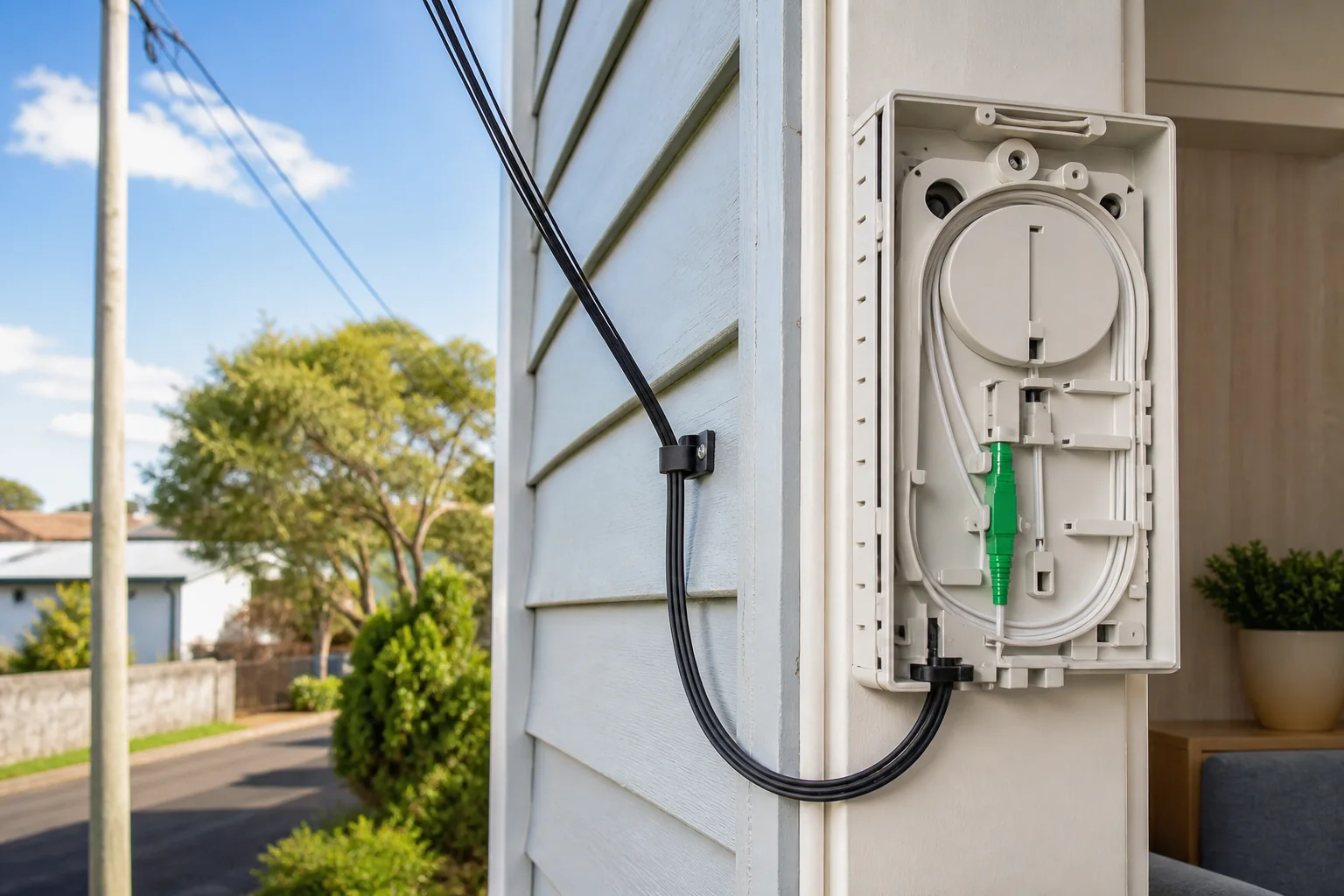
In many installations, the drop cable enters the building and must transition to indoor-rated cable. This can be done at an entry point using a splice or connector. Alternatively, some outdoor cables have dual ratings (e.g., outdoor/indoor) and can be used both outside and inside, but verify the fire rating for indoor sections.
Design Tradeoffs: Jacket, Strength Members, and Fire Safety
Understanding the material properties helps you evaluate tradeoffs:
- Jacket material: PE offers excellent UV and moisture resistance but is flammable. LSZH is fire-retardant and emits low smoke, but may have lower UV resistance unless specially formulated. PVC is cost-effective but produces toxic smoke when burned.
- Strength members: Aramid yarn provides high tensile strength and is dielectric (no metallic components). Fiberglass rods are stiff and help prevent buckling. Steel messengers add strength but require grounding in some cases.
- Fire safety: Indoor cables must meet local building codes, such as NFPA 262 for plenum or UL 1666 for riser. Outdoor cables are not required to meet these, but if they enter the building, the indoor section must comply.
For a comparison, see the table below:
| Feature | Indoor Drop Cable | Outdoor Drop Cable |
|---|---|---|
| Jacket material | LSZH, PVC | PE, LSZH (UV-stabilized) |
| UV resistance | Low | High |
| Moisture protection | None or minimal | Water-blocking or gel |
| Fire rating | Yes (plenum/riser) | Not required |
| Bend radius | Tighter (G.657) | Larger (G.652) |
| Strength member | Light | Heavy-duty |
| Typical use | Inside walls, conduits | Aerial, duct, direct burial |
Installation Implications: Aerial, Duct, and Indoor Routing
Installation methods differ significantly between indoor and outdoor cables.
Aerial Installation
Outdoor drop cables are often lashed to a messenger wire or use a self-supporting design with an integrated messenger. You must account for sag and tension. Use proper hardware like clamps and dead-ends to secure the cable. Avoid overtightening, which can cause stress and micro-bends.
Duct Installation
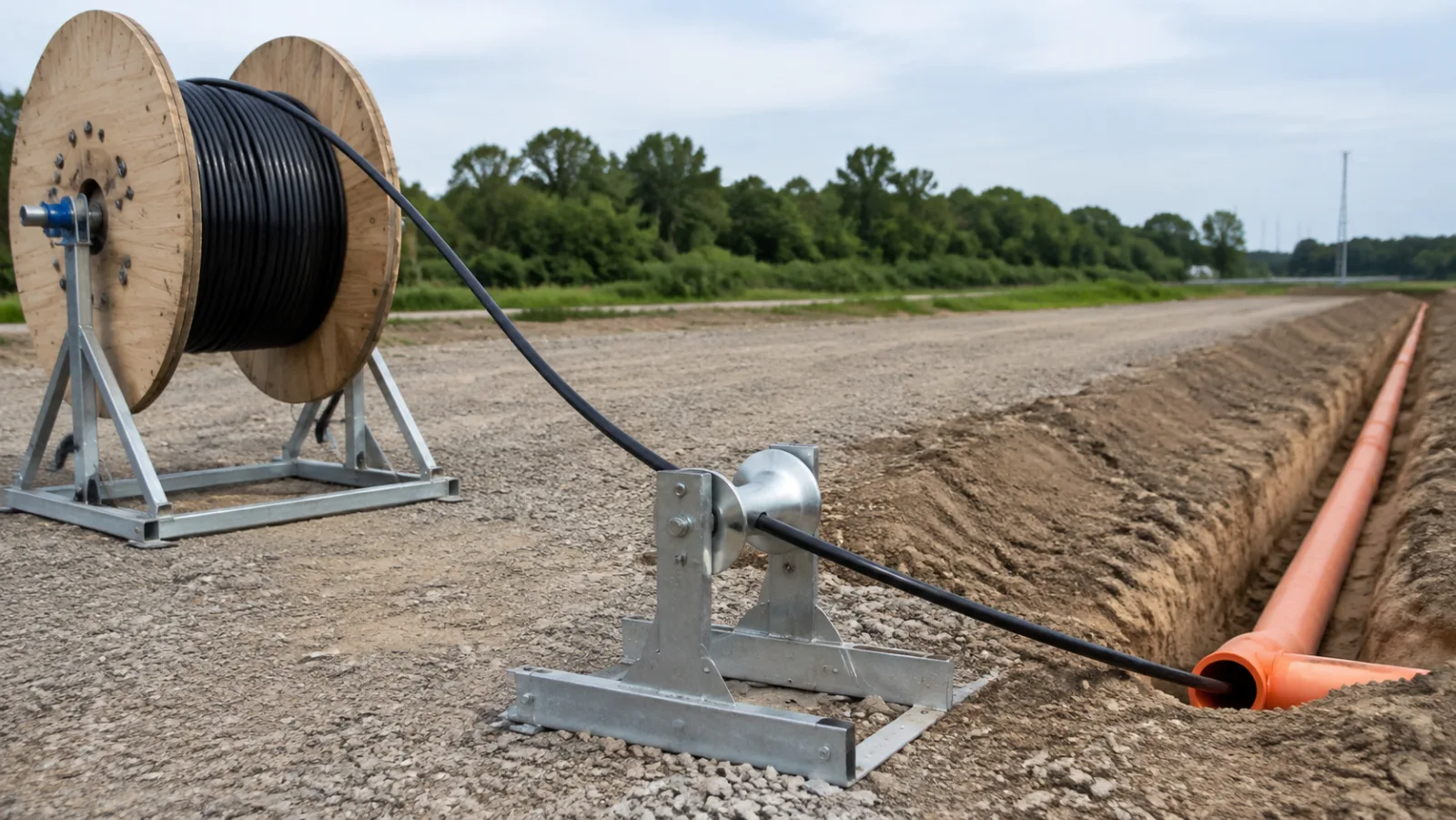
For underground ducts, pull the cable using a pulling grip attached to the strength member, not the jacket. Lubricate the duct to reduce friction. The cable’s tensile load rating should be respected; typical pulling tension for drop cables is around 100-200 N. If the run is long, consider intermediate pulling points.
Indoor Routing
Indoor cables are often installed in raceways, wall cavities, or conduit. Use a fish tape to pull the cable. Maintain a bend radius of at least 20 mm for G.657.A2 fibers, but check the manufacturer’s spec. Avoid sharp edges and use grommets where cables pass through walls.
Transition Point
Where the outdoor cable enters the building, install a transition closure or a wall entry point. This protects the cable from moisture and provides a clean transition to indoor cable. Some installers use a splice tray or a connectorized pigtail.
Testing and Quality Considerations
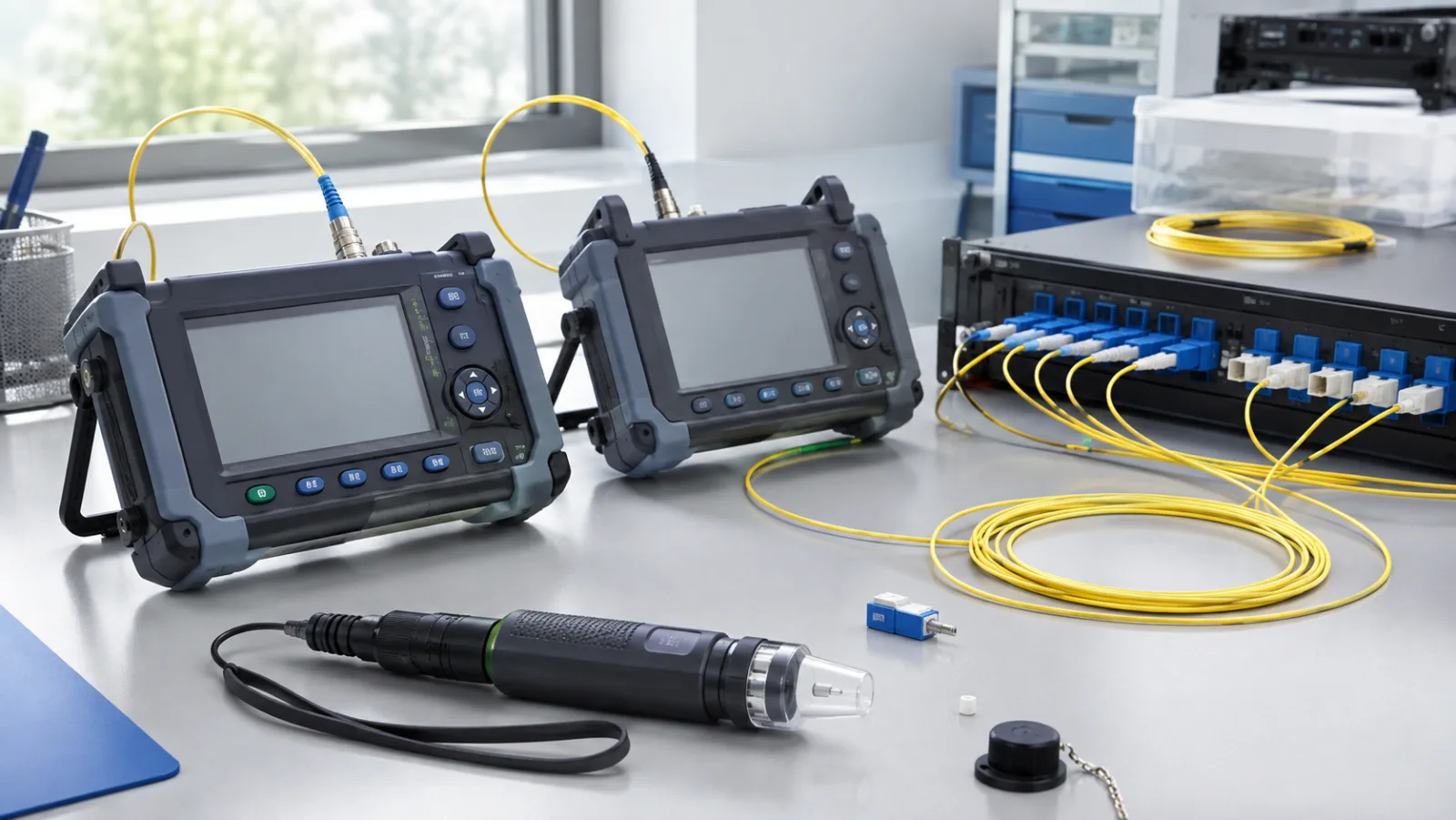
After installation, testing ensures the link meets performance requirements. Common tests include:
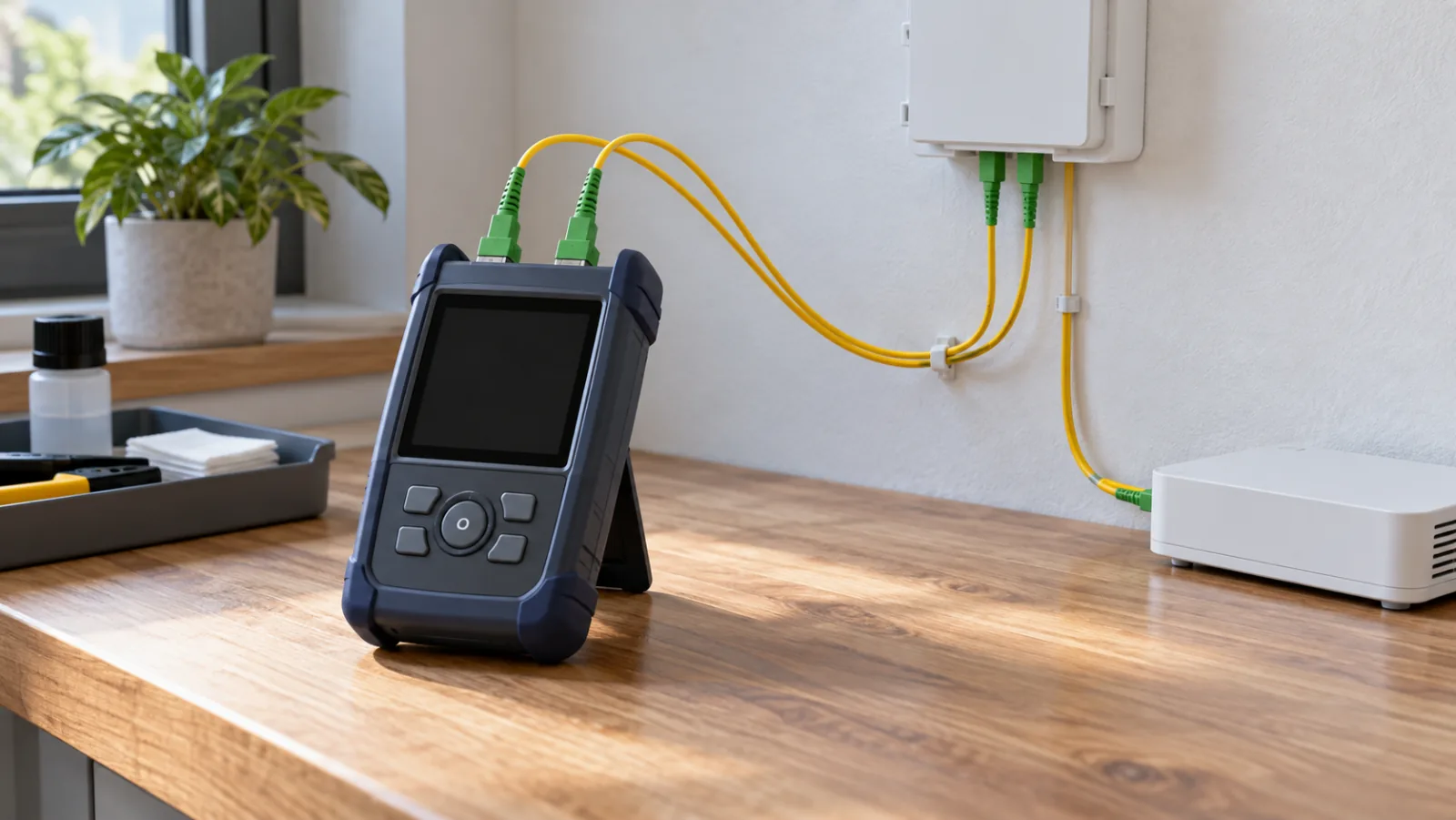
- Insertion loss: Use an optical power meter and light source to measure end-to-end loss. Typical budget for a drop link is less than 1 dB.
- Return loss: Use an OTDR to check for reflections at connectors or splices. High return loss can indicate poor terminations.
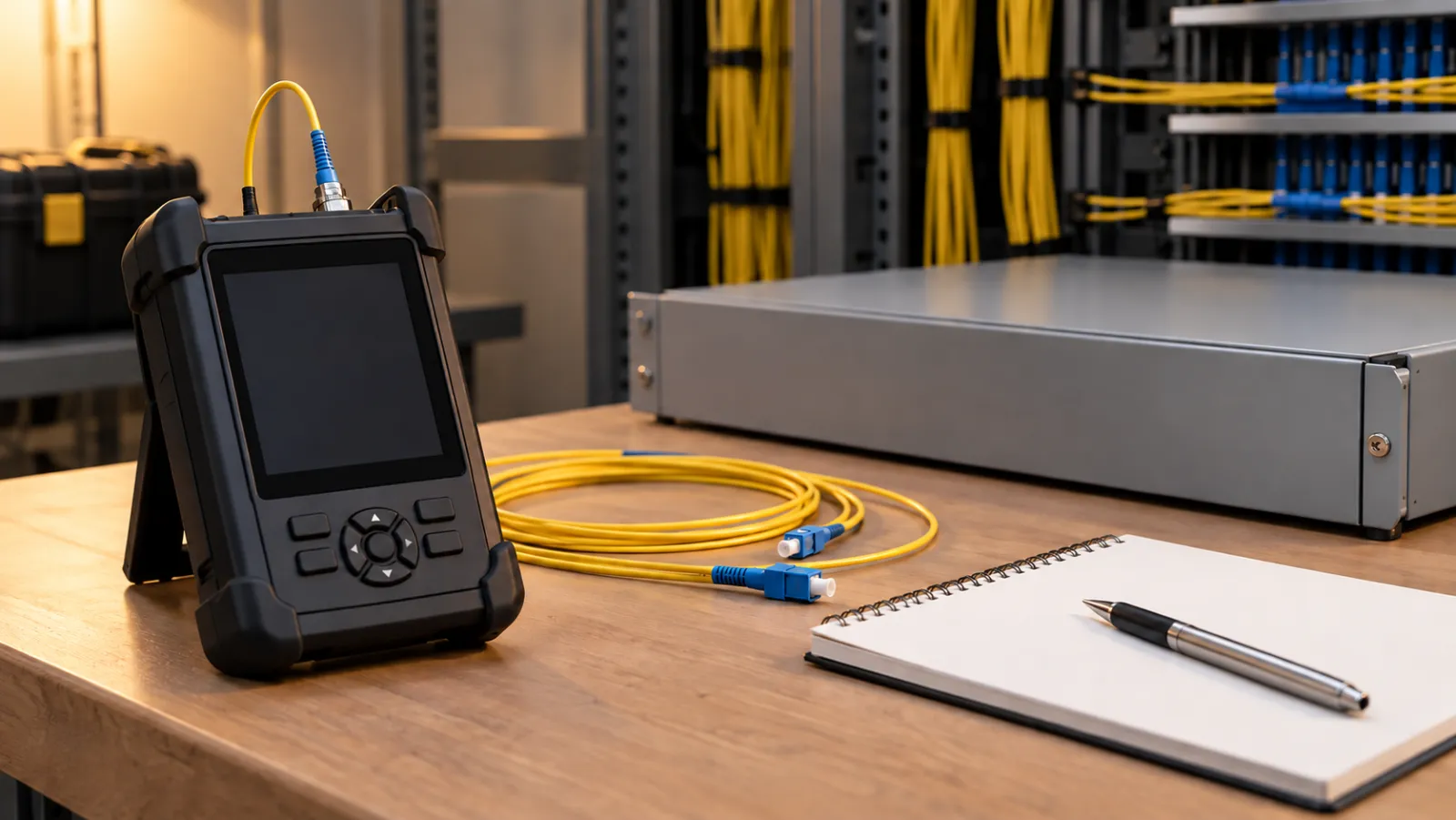
- OTDR testing: An OTDR can locate faults and measure attenuation. It is useful for documenting the installation.
For more on testing procedures, refer to the FOA’s guide to fiber optic testing. Also, ensure that the cable and components meet relevant standards, such as IEC 60794 series for optical cables. Quality assurance is critical; you can learn more about our quality control processes.
Common Mistakes to Avoid
- Using indoor cable outdoors: This leads to premature jacket degradation and moisture damage.
- Using outdoor cable indoors without checking fire rating: Some outdoor cables are not flame-retardant and can be a fire hazard inside walls.
- Ignoring bend radius: Sharp bends cause micro-bends and increased attenuation, especially with G.652 fibers.
- Pulling on the jacket instead of the strength member: This can stretch the jacket and damage the fibers.
- Not water-blocking at the entry point: Water can travel along the cable and into the building.
- Skipping post-installation testing: Without testing, you may not detect damage until after the customer complains.
Procurement Checklist
When ordering FTTH drop cables, use this checklist to ensure you get the right product:
- Fiber type: Specify G.652.D for standard outdoor, G.657.A1/A2 for indoor or bend-sensitive areas.
- Fiber count: Usually 1, 2, or 4 fibers.
- Jacket material: Specify PE for outdoor, LSZH for indoor or dual-rated.
- Fire rating: For indoor, specify plenum or riser rating as required.
- Strength member: Specify dielectric or steel, and tensile rating.
- Water blocking: For outdoor, specify gel-filled or dry water-blocked.
- Length and packaging: Determine reel lengths and whether you need pre-connectorized ends.
- Standards compliance: Request test data or certificates to ensure compliance with ITU and IEC standards.
For a range of fiber optic cables, visit our fiber optic cable products page. If you have specific requirements, contact our team for guidance.
Conclusion and Recommendations
Selecting the right FTTH drop cable is a balance of environmental exposure, fire safety, installation method, and cost. For outdoor sections, choose a cable with UV-resistant jacket and water blocking. For indoor sections, prioritize flame-retardant jacket and bend-insensitive fiber. In mixed environments, consider a dual-rated cable or plan a proper transition point.
Always adhere to manufacturer specifications and industry standards. Test your installation to verify performance. By following the checklist above, you can avoid common pitfalls and ensure a reliable fiber connection for years to come.
Frequently Asked Questions
Can I use an outdoor FTTH drop cable indoors?
Yes, but only if the cable has a fire-rated jacket (e.g., LSZH) that meets local building codes. Many outdoor cables use PE jackets that are not flame-retardant, so check the specifications. If in doubt, use a separate indoor cable or a dual-rated cable.
What is the typical bend radius for indoor vs outdoor drop cables?
Indoor cables with G.657.A2 fiber can have a dynamic bend radius as low as 10-15 mm, while outdoor cables with G.652.D fiber typically require a minimum bend radius of about 30 mm during installation and 60 mm after installation. Always consult the manufacturer's datasheet.
Do I need a different connector for indoor vs outdoor drop cables?
Connectors are generally the same (e.g., SC/APC or LC). However, for outdoor applications, connectors should be ruggedized or housed in weatherproof closures to protect against moisture. Indoor connectors can be standard.
How do I transition from outdoor to indoor cable at the building entry?
Use a wall entry point or a transition closure. You can splice the outdoor cable to an indoor pigtail, or use a connectorized outdoor cable and a bulkhead adapter. Ensure the transition is sealed against water ingress.
What is the maximum pulling tension for FTTH drop cables?
Typical values range from 100 to 400 N, depending on the cable design. Always refer to the manufacturer's specification. Exceeding the rated tension can damage the fibers or the jacket.
Are there hybrid cables that work both indoors and outdoors?
Yes, some cables are rated for both outdoor and indoor use, often with an LSZH jacket that is also UV-stabilized. These are convenient but may be more expensive than separate cables.
Complete topic guide: FTTH Network Design: Architecture, Loss Budget and Deployment.