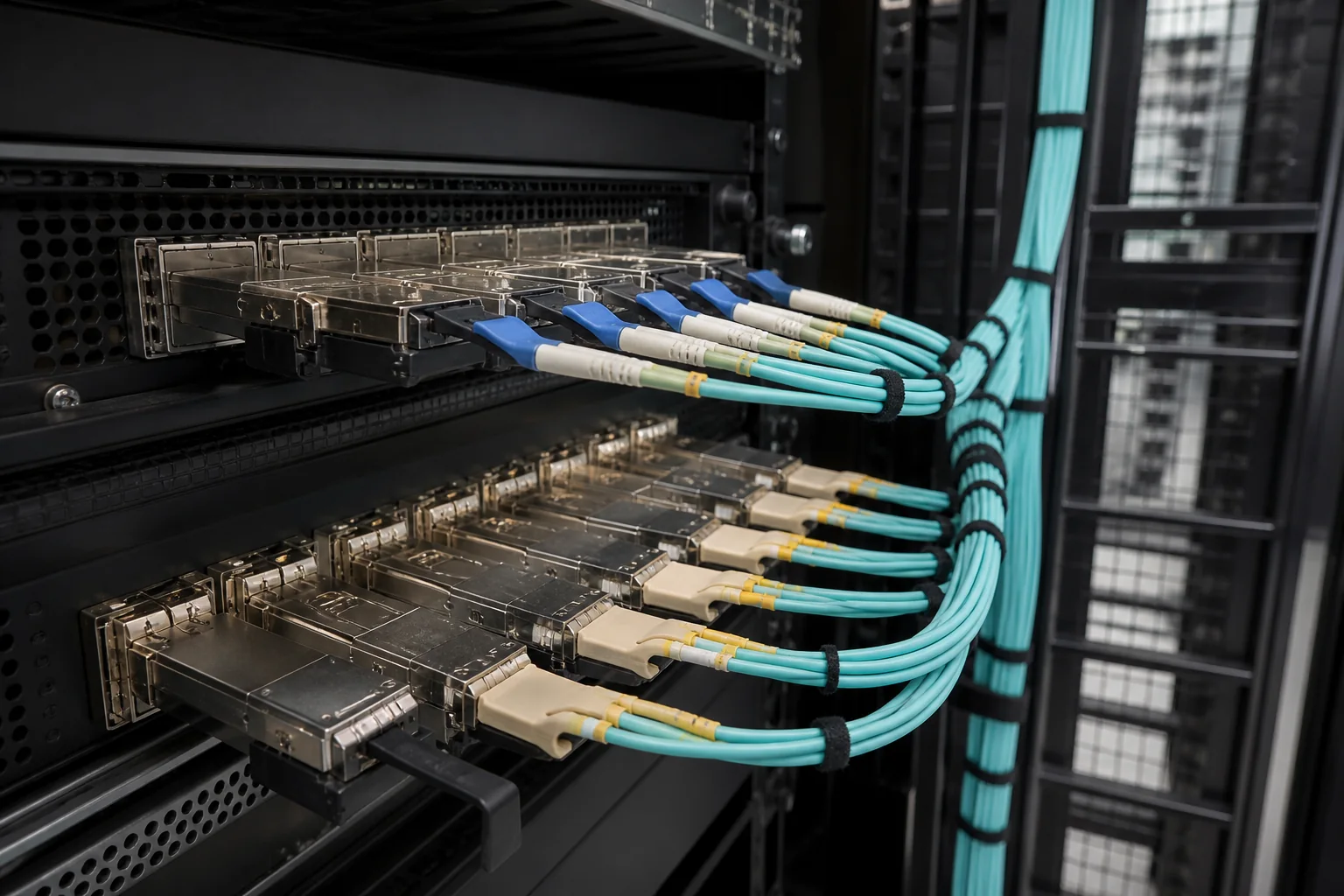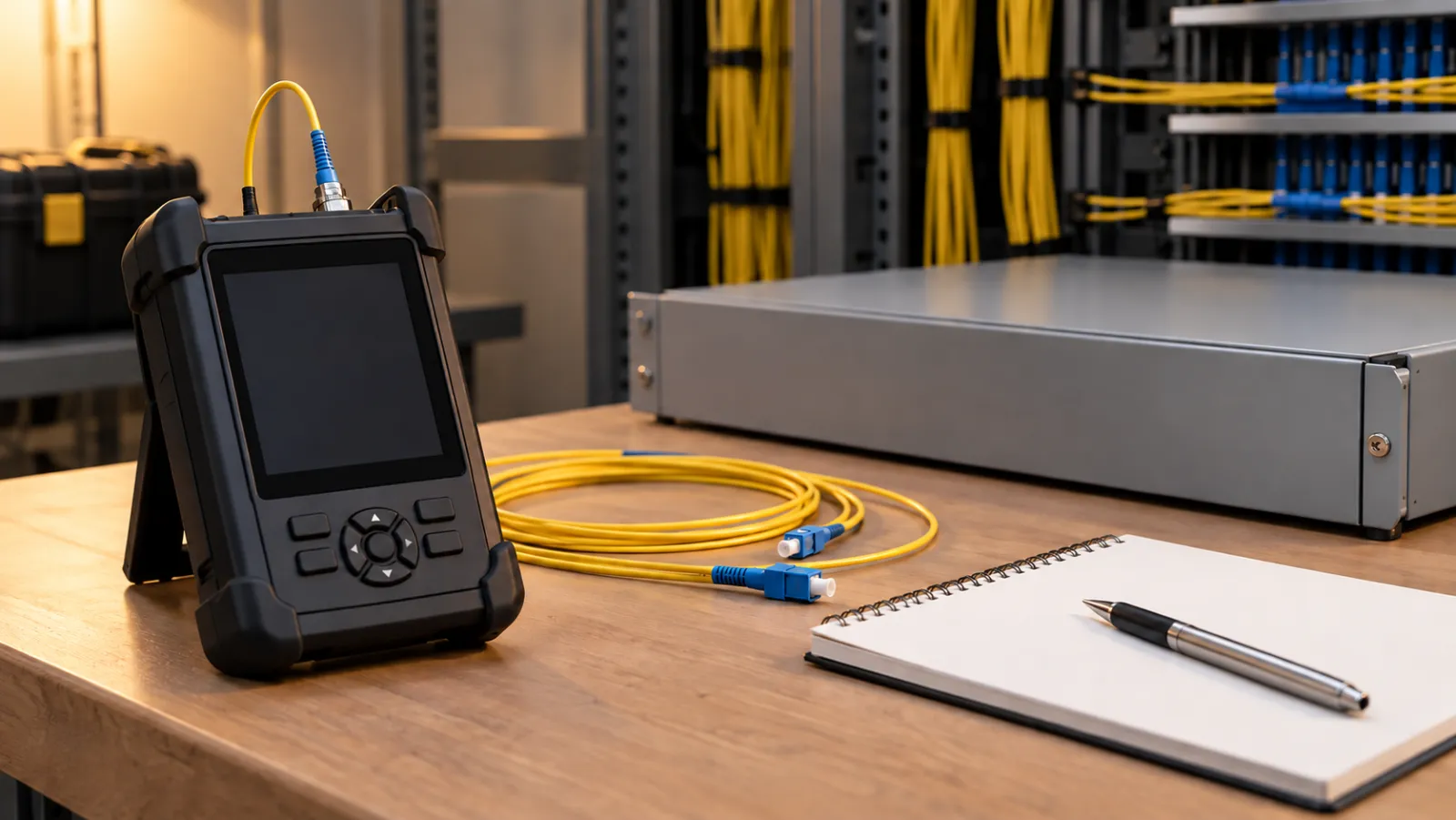
Summary: A fiber optic test report handover checklist should answer three questions: was every required fiber tested, was the approved method used, and can each result be traced to the installed asset? A folder of green pass icons is not enough. The audit below turns drawings, loss measurements, OTDR records and exception decisions into a package that an owner can use after the contractor leaves.
Define the deliverable before field testing starts
Agree on the test schedule, file formats, naming rules, acceptance limits and approval responsibilities before the first measurement. Otherwise the installation team may complete technically useful tests but export a report that cannot be reconciled with the owner’s asset register. The purpose is not to maximize paperwork. It is to preserve the information needed to operate, repair and extend the installed network confidently.
The FOA testing guide identifies essential records such as fiber identity, operator, equipment, reference method, wavelength and measured loss. Use those basic facts as the foundation, then add project-specific traceability fields. The checklist here is an original administrative audit framework, not a claim that a standards body requires its exact filenames, retention period or approval workflow.
Start with the installed asset register
Create one controlled list of cable segments, endpoints, panels and individual fibers. Decide whether the identifier refers to a strand, a duplex circuit, a cable or a complete channel. A 24-fiber cable contains 24 strand paths; calling it twelve ports may be reasonable operational shorthand but can create an incomplete test schedule. Put the counting convention at the top of the register.
Reconcile the register with the final drawings, not only the original tender design. Field changes may add a splice enclosure, move a panel or alter a route. Each accepted change should have a revision reference. Unused fibers remain visible in the inventory with their agreed testing status; they should not disappear merely because no active service was assigned during commissioning.
Use identifiers that survive staff changes
A useful identifier combines stable asset references rather than a technician’s temporary nickname. For example, a project may define building, cable, fiber number, wavelength and direction as separate fields. Keep a mapping table for old and new identifiers when labels change. Rename exported copies only through a documented mapping process, preserving the original instrument files and avoiding any change to measured values.
Build the expected-results matrix
For an explicit hypothetical example, assume a contract requires insertion-loss measurements on all 24 fibers at two wavelengths in both directions. The expected coverage is 24 × 2 × 2 = 96 loss-result combinations. If the same contract also requires an OTDR trace for each combination, expect another 96 trace records. This count comes from the assumed contract, not a universal requirement for every installation.
The total is 192 logical evidence items, but not necessarily 192 files. One native file can contain several wavelength results, and a combined PDF may contain hundreds of pages. Audit the measurement combinations represented, not the number of attachments. If a submission covers only 23 fibers, it may be missing four required combinations from each test method even though its summary looks complete.
| Audit field | Example convention | What it prevents |
|---|---|---|
| Asset | Cable C07, fiber 01 | Results assigned to the wrong strand |
| Direction | Building A to Building B | Unclear forward/reverse mapping |
| Wavelength | Actual test wavelength recorded | Assuming one result covers every service band |
| Method | Loss test or OTDR acquisition | Substituting unlike evidence |
| Revision | Original, superseded or accepted retest | Duplicate results hiding a missing path |
| Disposition | Accepted, open exception or excluded by agreement | Unresolved work appearing complete |
Check the measurement context behind each pass
For insertion-loss records, verify the reference method, reference time where available, test cord arrangement, wavelength, link boundary and selected limit. Make sure the limit corresponds to the approved design or application rather than a convenient instrument default. Record whether connectors at the measurement boundaries are included. The same numeric loss can mean different things when measured between different reference planes.
For OTDR records, retain the acquisition settings needed to interpret the trace, including wavelength, range, pulse width, averaging and index settings as applicable. Identify launch and receive fibers, the tested endpoints and the basis for any bidirectional event averaging. Preserve native data when available alongside a human-readable export. A cropped screenshot without its acquisition context is a poor long-term troubleshooting baseline.
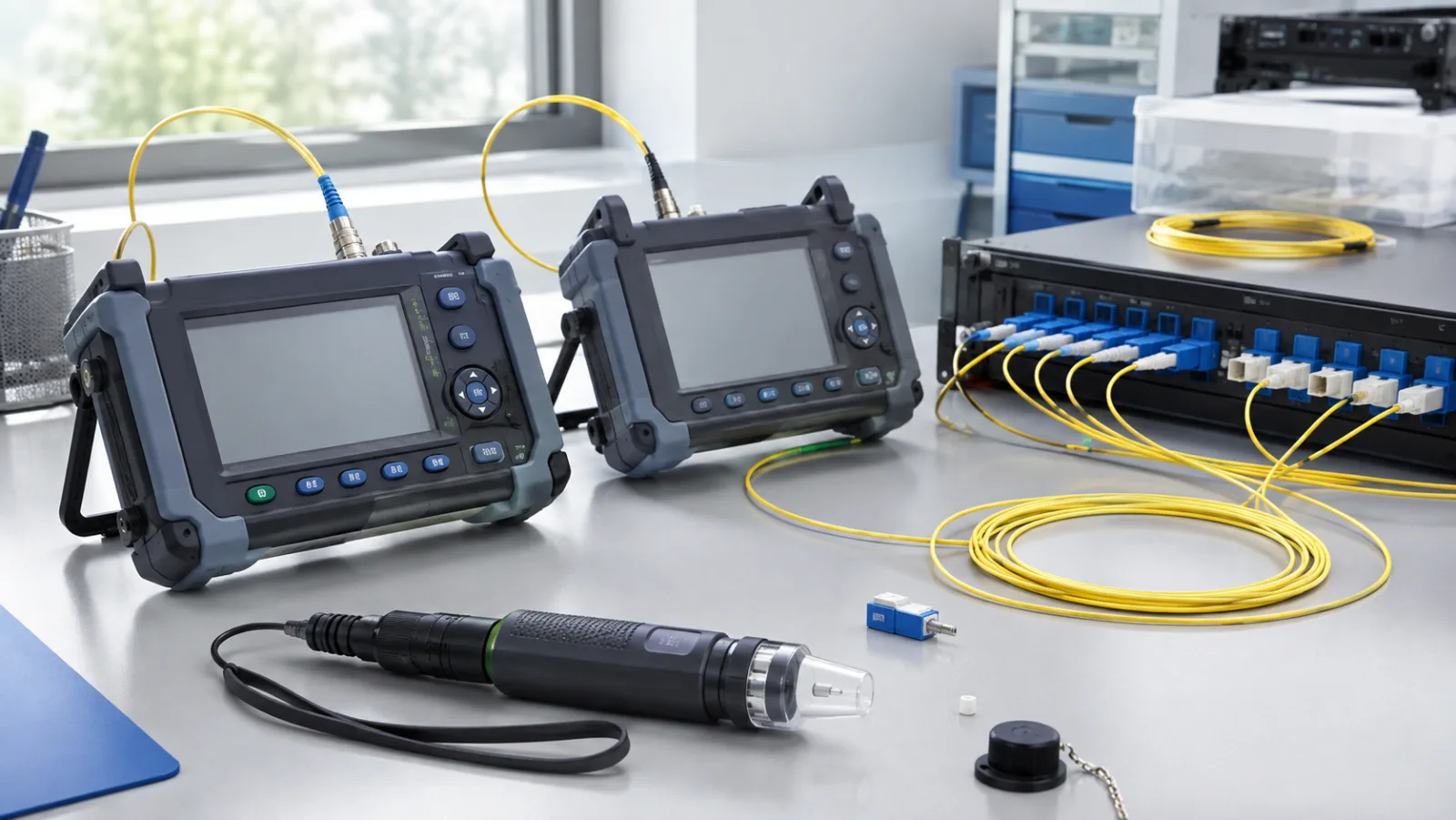
Fluke Networks’ OLTS and OTDR testing discussion explains their complementary roles: end-to-end loss and event characterization are different evidence. A handover package should preserve that distinction. If the contract requires both, a trace summary cannot silently replace the loss test. For procedural background, see the fiber installation and testing guide.
Audit limits and uncertainty without moving the goalposts
Record the approved limit set and its revision in the package index. If a limit changes during the project, identify who approved the change and which results need reassessment. Do not relabel a failed test as acceptable by switching to another application profile after measurement without documented engineering approval. Keep contractual criteria separate from a manufacturer’s typical performance value.
In a hypothetical comparison, suppose a result is 1.84 dB against an approved 2.00 dB limit. The simple arithmetic difference is 0.16 dB. That is a nominal margin, not automatically a statement about confidence in acceptance. Apply the agreed measurement-uncertainty and decision rule rather than inventing one during handover. The fiber loss measurement uncertainty guide addresses that separate evaluation.
Reconcile retests and open exceptions
Maintain an exception register with asset ID, issue, responsible party, agreed action and disposition. Distinguish a missing result from an actual failure and from a path explicitly excluded by contract. Those three states require different actions. A dashboard that groups all of them as “pending” may help scheduling, but the final record must explain exactly what the owner has and has not accepted.
When cleaning, repair or retermination leads to a retest, connect the new result to the earlier one. Retain the reason, intervention date and changed component identification when relevant. Mark the accepted result clearly without deleting the historical evidence. This makes it possible to distinguish a genuine repair from repeated testing until one favorable value appeared.
Sample quality after checking complete coverage
First check that every required measurement combination exists. Then perform the agreed technical review of individual records, including unusual lengths, suspiciously identical results, missing endpoint events or inconsistent directions. Any sampling plan must come from the project agreement; it does not excuse a missing mandatory test. Escalate anomalies for clarification before treating them as misconduct or assuming the entire installation is defective.
Deliver files the owner can actually use
Provide a concise index linking the asset register to readable reports, native measurement data and as-built drawings. Document the software needed to open native files and verify that representative files open on the owner’s approved environment. Where proprietary formats are involved, retain an accessible export as well. Confirm that all hyperlinks are relative or otherwise valid in the delivered package, not tied to one technician’s laptop.
Protect confidential customer locations, contact details and restricted reports through the agreed access controls. Public marketing extracts should be authorized separately and should never expose a full private handover package by default. Keep a controlled master copy and a clear revision history. A checksum manifest can help detect later file changes, but it does not prove the measurements themselves are valid.
Close the handover with named responsibilities
Assign the owner of unresolved actions and record the acceptance decision without inventing an engineer’s review or signature. Specify which files are final and which remain provisional. If procurement includes fiber installation and test tools, ask about export formats and record fields before selecting equipment; confirm actual capabilities for the proposed model rather than assuming every tester produces the same package.
A successful handover is reproducible: another qualified person can identify a fiber, locate the relevant evidence, understand its test conditions and see how exceptions were resolved. That is the practical goal of the checklist. The example counts and arithmetic here illustrate a review method only and are not results from a customer project or a substitute for the agreed acceptance specification.
Frequently Asked Questions
Does a PDF showing all green pass icons complete a fiber handover?
Not by itself. Confirm asset identity, complete required coverage, the approved test method and limits, and the disposition of exceptions.
How many results are expected for the 24-fiber example?
Under its stated contract assumptions, twenty-four fibers at two wavelengths in both directions require ninety-six loss-result combinations and ninety-six OTDR trace records.
Must every logical test result be a separate file?
No. One file may contain multiple results. Audit coverage by fiber, wavelength, direction and method rather than by attachment count.
Should failed measurements be deleted after a successful retest?
No. Retain the earlier evidence and connect the accepted retest to the documented repair or other intervention, with clear revision status.
Do file checksums prove that optical measurements are correct?
No. Checksums can help detect file changes, but measurement validity still depends on identity, methods, settings, calibration evidence and the agreed technical review.