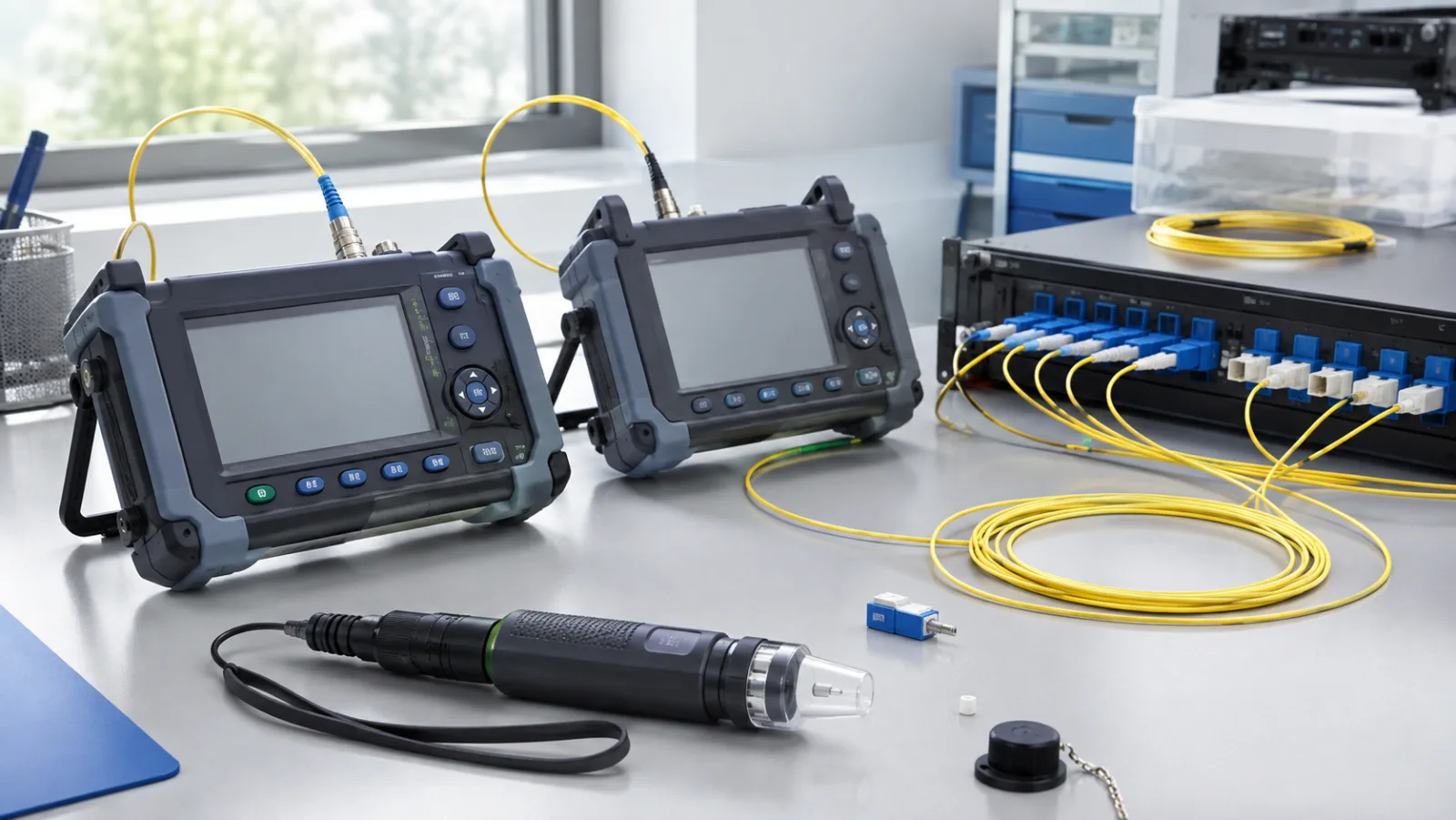
Fiber optic cables must withstand physical stresses during installation and service, and the fiber cable tensile crush bend test is the standard way to verify that durability. These tests simulate pulling, squeezing, and bending to ensure the cable protects its glass fibers without excessive attenuation or breakage. This article explains each test, the standards that define them, how to interpret results, and how to apply them when selecting and installing fiber optic cables.
Why Tensile, Crush, and Bend Tests Matter
Fiber optic cables are not just passive conduits; they are precision assemblies that must protect hair-thin glass fibers from mechanical stress. During installation, cables are pulled through conduits, bent around corners, and may be stepped on or clamped. In service, they face environmental loads such as wind, ice, or accidental impact. Without rigorous testing, a cable might perform well in the lab but fail in the field, leading to costly repairs and downtime.
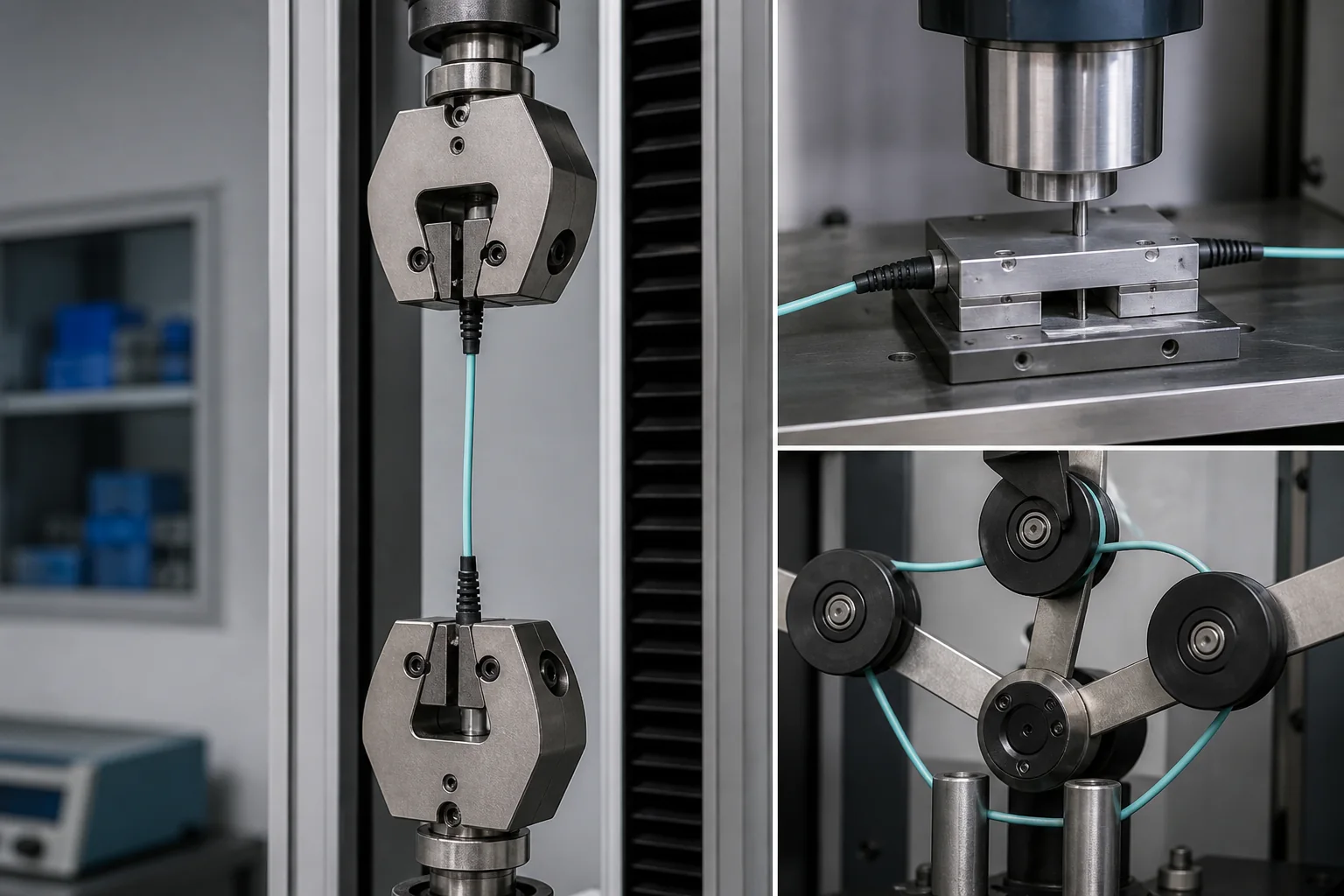
The three primary mechanical tests—tensile, crush, and bend—evaluate different aspects of cable robustness. Tensile testing measures how much pulling force the cable can handle without damaging the fibers. Crush testing assesses resistance to point loads or compression. Bend testing verifies that the cable can be flexed to a specified radius without causing excessive signal loss. Together, these tests give network designers confidence that the cable will survive real-world conditions.
Tensile Test: Pulling Strength
The tensile test simulates the pulling forces applied during cable installation. It determines the maximum load the cable can withstand while maintaining optical performance.
How the Test Is Performed
A cable sample is secured at both ends, and a tensile force is applied gradually while monitoring optical attenuation. The test typically measures two values: the maximum tensile load (often called the rated tensile strength) and the tensile load during installation. The cable must maintain acceptable attenuation (usually a small increase, such as 0.1 dB or less) at the rated load, and after the load is removed, the attenuation should return to near baseline.
Typical Values
Common tensile ratings for indoor cables range from 100 to 500 Newtons (N), while outdoor and aerial cables may be rated from 1000 to 5000 N or more. For example, a typical indoor distribution cable might have a maximum tensile strength of 200 N, while a loose-tube outdoor cable could be rated at 2700 N. These values are specified in standards and product datasheets.
Design tradeoffs: Higher tensile strength usually requires stronger reinforcement, such as aramid yarn or steel wire, which increases cable diameter and cost. Over-specifying tensile strength can lead to unnecessary expense and installation difficulty, while under-specifying can result in fiber damage during pulls.
Crush Test: Resistance to Squeezing
The crush test evaluates the cable’s ability to withstand compressive forces, such as when a cable is stepped on, clamped, or compressed by heavy objects.
Test Procedure
A specific length of cable is placed between two flat plates, and a force is applied perpendicular to the cable axis. The force is typically increased to a specified value (e.g., 100 N/cm or 220 N/cm) while monitoring attenuation. After the load is removed, the cable should show no permanent damage or significant increase in attenuation.
Typical Crush Ratings
Indoor cables often have crush ratings of 100 N/cm or 220 N/cm, while rugged outdoor cables may be rated at 1000 N/cm or higher. The test ensures that the cable’s internal structure, including buffer tubes and strength members, can redistribute the load without crushing the fibers.
Design tradeoffs: Enhanced crush resistance often requires thicker jackets or additional armor, which increases weight and cost. For indoor plenum cables, crush resistance must be balanced with flexibility and fire safety requirements.
Bend Test: Flexibility and Macrobending
Bend testing verifies that a cable can be bent to a specified radius without causing excessive signal loss. This is critical for installation in tight spaces and for maintaining long-term reliability.
Types of Bend Tests
There are two main types: installation bend (a one-time bend to a smaller radius) and repeated bending (cycling the cable back and forth to simulate flexing). The test measures attenuation increase during the bend and after recovery.
Typical minimum bend radii for fiber cables are specified in datasheets, often around 10 times the cable diameter for installation and 15 times for long-term static bends. For example, a cable with a diameter of 6 mm might have a minimum installation bend radius of 60 mm.
Design tradeoffs: More flexible cables use materials that allow tighter bends, but they may have reduced crush resistance or tensile strength. Bend-insensitive fibers (e.g., G.657) allow tighter bends without significant loss, but they may have slightly higher attenuation than standard G.652 fibers.
Key Standards and Specifications
Several international standards define the test methods and performance requirements for fiber optic cables. These ensure consistency across manufacturers and installations.
| Standard | Scope | Relevance |
|---|---|---|
| IEC 60794-1-2 | Optical fibre cables – Part 1-2: Generic specification – Basic optical cable test procedures | Defines tensile, crush, bend, and other mechanical test methods. |
| ITU-T G.652 | Characteristics of a single-mode optical fibre and cable | Specifies fiber geometry and transmission properties; often referenced for standard single-mode fiber. |
| ITU-T G.657 | Characteristics of a bending-loss insensitive single-mode optical fibre and cable | Defines fiber with improved bend performance, enabling tighter bend radii. |
| TIA-568 | Commercial building telecommunications cabling standards | Includes cable performance requirements for premises cabling. |
For detailed test procedures, refer to the IEC 60794-1-2 standard. The ITU-T G.652 recommendation and ITU-T G.657 recommendation provide fiber-specific parameters. The FOA also offers a practical guide to fiber optic testing at The FOA Reference Guide.
How to Use Test Data in Cable Selection
When choosing a fiber optic cable, you need to match the test ratings to your installation environment and application.
- Indoor vs. outdoor: Outdoor cables require higher tensile and crush ratings due to longer pulls and harsher conditions. Indoor cables can be lighter and more flexible.
- Installation method: If you are pulling through long ducts, a higher tensile rating is essential. For short patch cords, bend performance may be more important.
- Bend requirements: In data centers with tight cable management, consider G.657 bend-insensitive fiber and cables with lower minimum bend radii.
- Future-proofing: Choose cables that exceed current needs to accommodate future upgrades or changes in routing.
Always review the manufacturer’s datasheet for specific test values and conditions. If a cable’s test data is not available, ask the supplier for it or consider a more transparent vendor.
Installation Implications and Best Practices
Understanding tensile, crush, and bend limits is crucial during installation to avoid damaging the cable.
Pulling
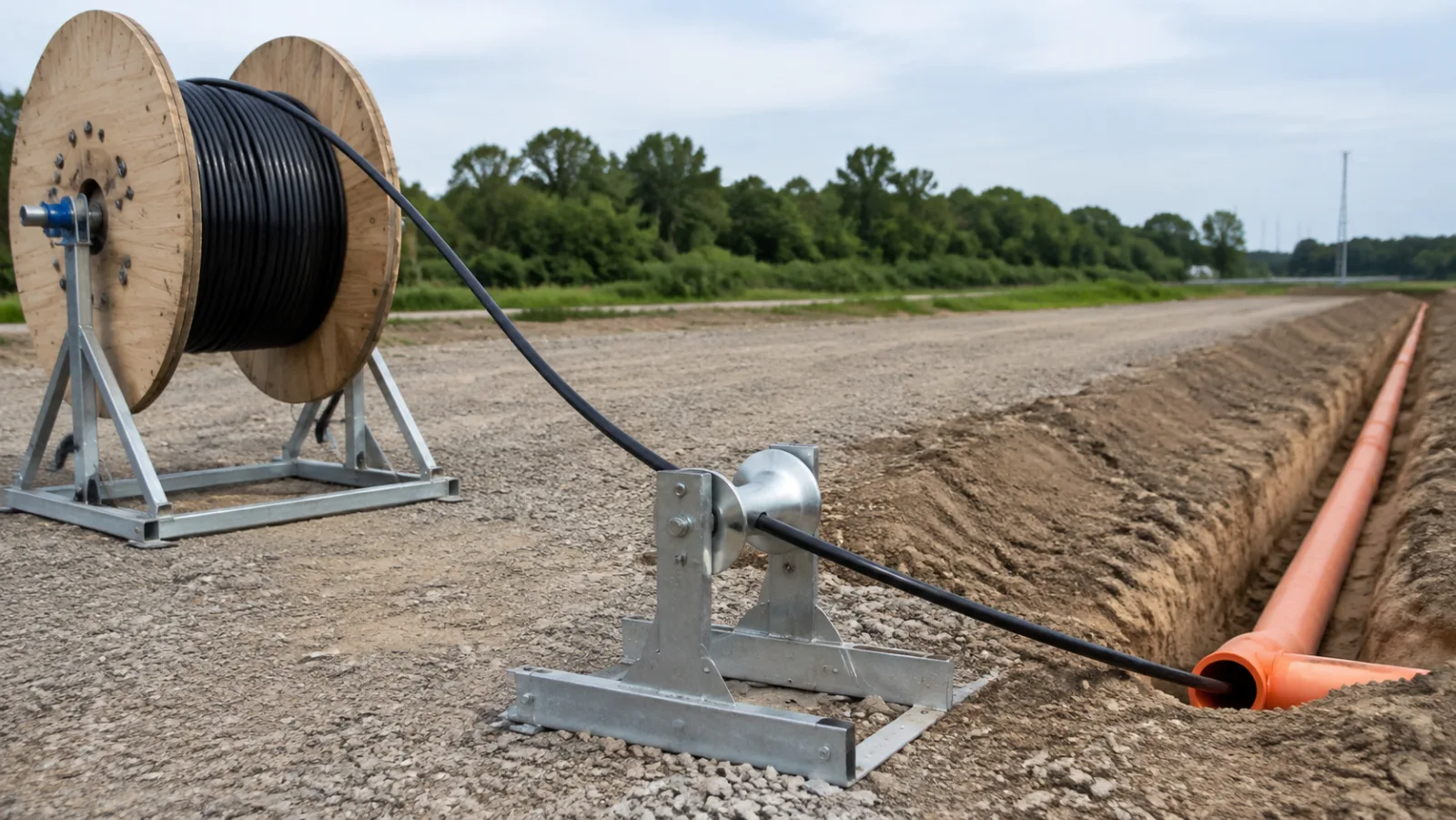
Use a pulling grip that distributes force evenly over the cable’s strength members, not just the jacket. Monitor the pulling force with a dynamometer to ensure you stay within the rated tensile load. For long pulls, use intermediate pulling points to reduce tension.
Bending
Respect the minimum bend radius at all times. Use cable guides and sweeps to avoid sharp bends. When coiling slack, use a large loop diameter.
Crush Protection
Avoid stepping on cables or placing heavy equipment on them. In high-traffic areas, use cable trays or protective conduit. If cables are clamped, use cushioned clamps that do not compress the cable excessively.
For more detailed guidance on quality practices, visit our quality assurance page and testing resources.
Common Mistakes in Testing and Handling
Even with good test data, mistakes can occur. Here are some pitfalls to avoid:
- Ignoring test conditions: Test results are valid only under specified conditions (e.g., temperature, cable length). Applying them to different environments can be misleading.
- Over-tightening cable ties: This can crush the cable, causing attenuation and fiber stress.
- Pulling beyond rated tension: This can cause fiber breakage or increased attenuation that may not be immediately visible.
- Bending beyond the minimum radius: This can cause macrobending losses, especially in standard single-mode fiber.
- Assuming all cables are the same: Different manufacturers may have different ratings even for similar-looking cables. Always verify.
Procurement Checklist
When purchasing fiber optic cable, use this checklist to ensure you get a product that meets your needs:
- Verify that the cable meets relevant standards (e.g., IEC, ITU-T).
- Request and review the datasheet for tensile, crush, and bend ratings.
- Check the fiber type (e.g., G.652D or G.657A1) and its compatibility with your network.
- Consider the installation environment and choose appropriate ratings.
- Ask for test reports from a reputable third-party lab if available.
- Ensure that the cable’s jacket material is suitable for the environment (e.g., plenum, riser, outdoor).
- Compare prices in the context of performance, not just cost.
Conclusion
Tensile, crush, and bend tests are essential for ensuring fiber optic cable reliability. By understanding these tests, you can select the right cable for your project, install it correctly, and avoid costly failures. Always refer to recognized standards and manufacturer data, and when in doubt, consult with experienced professionals. For further assistance, contact our team for expert advice on fiber optic solutions.
Frequently Asked Questions
What is the difference between tensile strength and crush resistance in fiber cables?
Tensile strength measures how much pulling force the cable can withstand without damaging the fibers, while crush resistance measures how much compressive force the cable can handle without excessive attenuation. Both are critical for different installation scenarios.
What are typical tensile and crush ratings for indoor fiber optic cables?
Indoor cables often have tensile ratings from 100 to 500 N, and crush ratings from 100 to 220 N/cm. However, exact values depend on the cable design and manufacturer, so always check the datasheet.
How is the bend test performed on fiber optic cables?
The bend test involves bending the cable around a mandrel of a specified radius and measuring the optical attenuation. It may be a one-time bend or repeated cycling, and the cable must show minimal loss increase during and after the test.
What standards govern fiber optic cable mechanical tests?
The primary standard is IEC 60794-1-2, which defines test methods for tensile, crush, bend, and other mechanical properties. ITU-T recommendations like G.652 and G.657 specify fiber characteristics, and TIA-568 covers premises cabling requirements.
Can bend-insensitive fiber (G.657) replace standard G.652 fiber in all applications?
G.657 fiber is designed for tighter bends, but it may have slightly higher attenuation than G.652. It is suitable for most applications, but for long-haul or high-performance links, G.652 is often preferred. Compatibility with existing systems should be verified.
Why is it important to respect the minimum bend radius during installation?
Bending beyond the minimum radius can cause macrobending losses, leading to increased attenuation and potential signal degradation. Severe bends can also stress the fiber and lead to breakage over time.
How can I verify that a cable meets its stated tensile and crush ratings?
Request the manufacturer's test reports or datasheets. For critical applications, you can have independent lab tests performed. Look for certifications from recognized bodies that indicate compliance with standards.
Complete topic guide: Fiber Optic Cable Quality Standards and Factory Testing.