Choosing between loose tube vs tight buffered fiber cable is a fundamental decision in fiber-optic network design. The two cable constructions differ in how the optical fibers are protected and how they handle environmental stress. Loose tube cables are the standard for outdoor and buried installations, while tight buffered cables are preferred for indoor and short-reach applications. This article explains the differences, selection criteria, installation implications, and testing considerations so you can choose the right cable for your project.
What Is Loose Tube Cable?
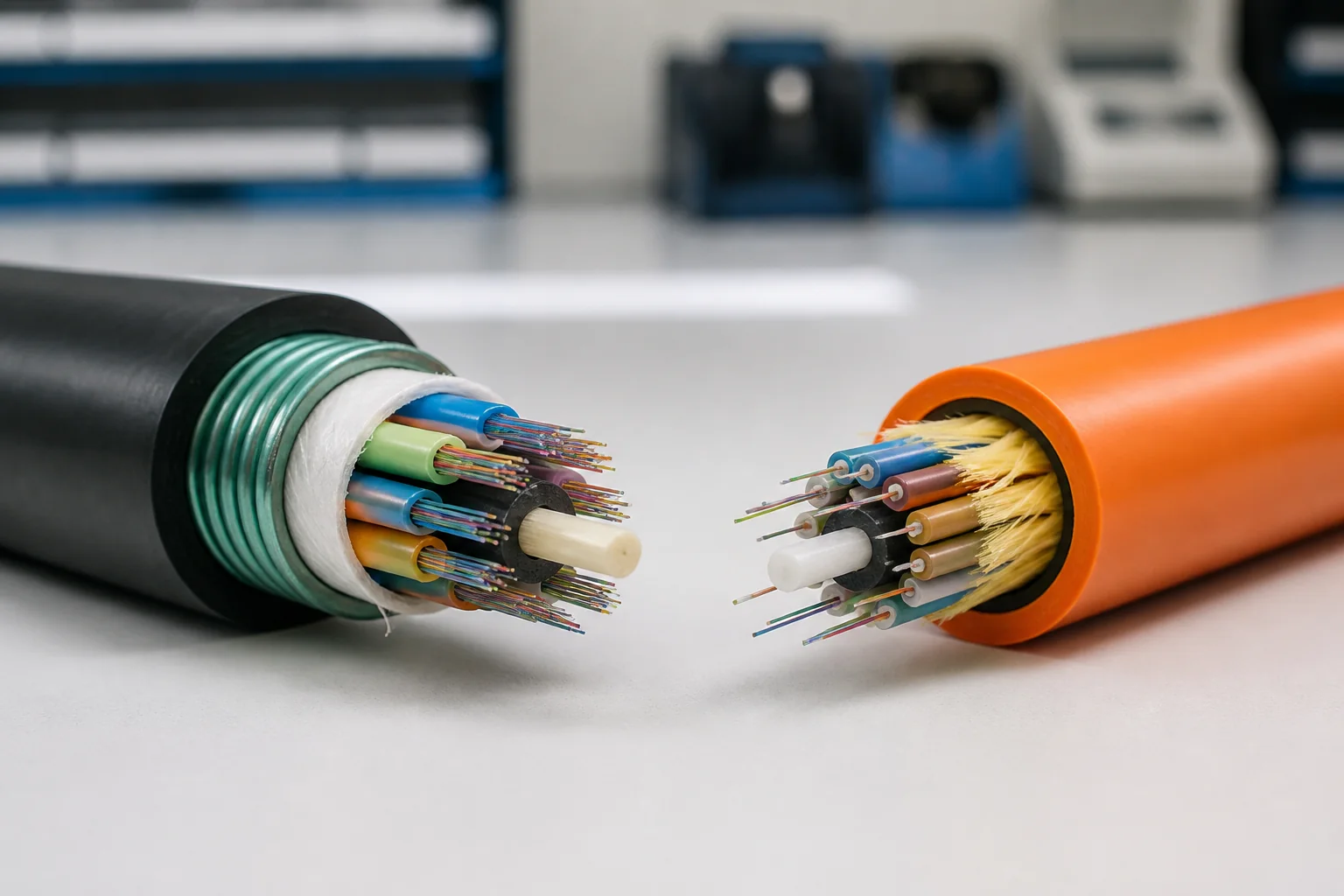
Loose tube cable, also known as loose buffer cable, consists of optical fibers placed loosely inside semi-rigid plastic tubes. These tubes are typically filled with a water-blocking gel or a dry water-blocking material to prevent moisture ingress. The tubes are then stranded around a central strength member (usually steel or fiberglass) and enclosed in a protective outer jacket. The loose tube design allows the fibers to move independently within the tube, which helps to isolate them from mechanical stress and temperature-induced expansion or contraction of the cable.
Loose tube cables are primarily designed for outdoor use. They are available in both single-mode and multimode versions, but single-mode loose tube cables are more common for long-haul and metro networks. The gel-filled or dry water-blocking system protects the fibers from moisture, making them suitable for direct burial, duct installation, and aerial applications.
What Is Tight Buffered Cable?
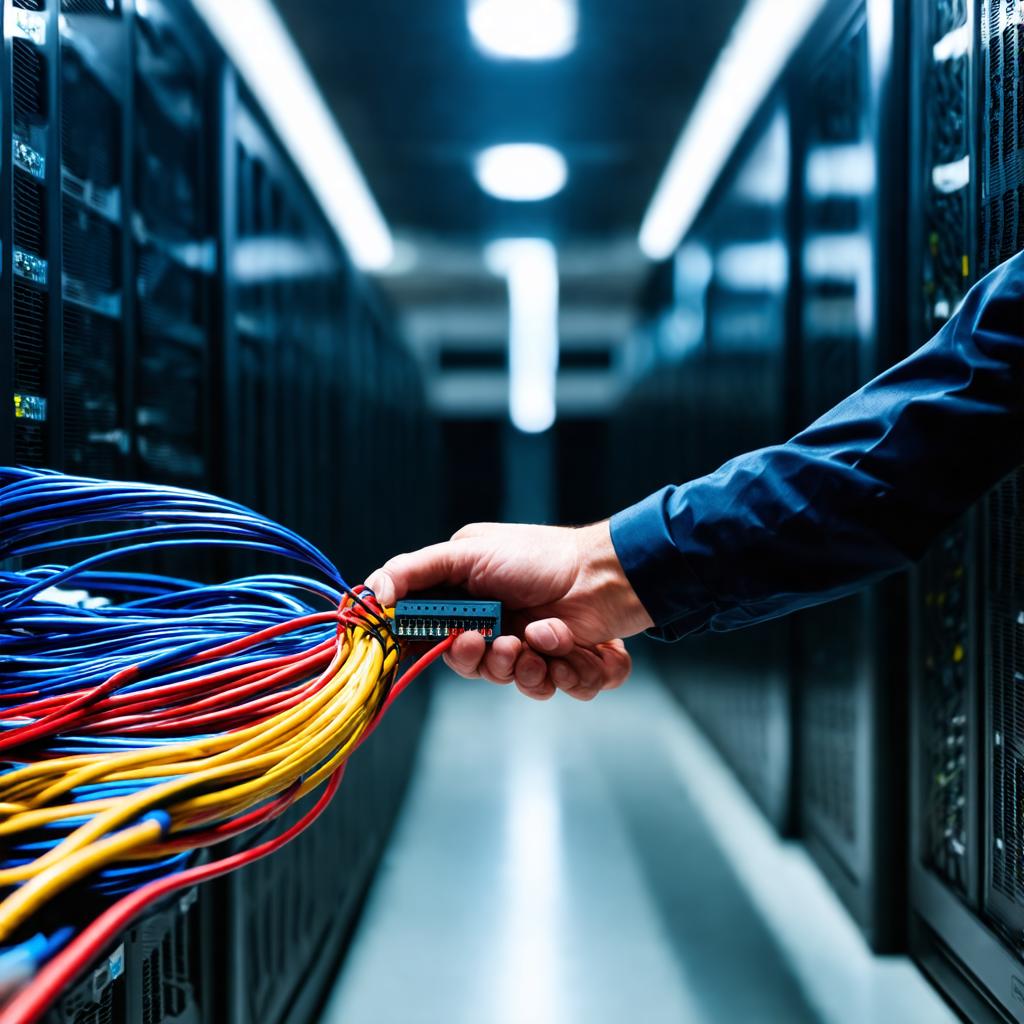
Tight buffered cable, sometimes called tight buffer cable, has a protective buffer coating applied directly over each optical fiber. This buffer is typically a thermoplastic material such as nylon or PVC, which provides mechanical protection and makes the fiber more robust for handling. Tight buffered fibers are often used in indoor applications, such as within buildings, data centers, and patch panels, because they are easier to terminate and handle than bare fibers.
Tight buffered cables can be constructed with individual tight buffered fibers that are then bundled together with strength members and an outer jacket. They are available in both distribution and breakout styles. Distribution cables have tight buffered fibers bundled together, while breakout cables have individual tight buffered fibers with their own strength members and jackets, making them suitable for direct connectorization.
Construction Differences
The fundamental difference between loose tube and tight buffered cables lies in how the fiber is protected. In loose tube cables, the fiber is loosely placed inside a tube, which is filled with a water-blocking compound. In tight buffered cables, the fiber is coated with a buffer layer that is in direct contact with the fiber. This leads to several construction variations:
- Fiber protection: Loose tube provides a buffer of air and gel, while tight buffer provides a solid plastic layer.
- Water blocking: Loose tube often uses gel or dry water-blocking materials; tight buffer cables typically do not require water blocking for indoor use.
- Strength members: Loose tube cables have a central strength member; tight buffer cables may have strength members like aramid yarn.
- Jacket: Loose tube cables have a rugged outer jacket for outdoor environments; tight buffer cables have a more flexible jacket for indoor use.
Performance Comparison
When comparing loose tube vs tight buffered fiber cable, several performance factors come into play:
| Factor | Loose Tube | Tight Buffered |
|---|---|---|
| Temperature range | Wide range (-40°C to +70°C) | Narrower range (typically -20°C to +70°C) |
| Moisture resistance | Excellent (gel or dry water-blocking) | Good for indoor, but not for long-term outdoor exposure |
| Flexibility | Less flexible due to rigid tubes | More flexible and bendable |
| Termination | Requires more preparation (stripping tubes) | Easier direct termination |
| Cost | Generally lower for outdoor long runs | Higher per meter for indoor use |
Loose tube cables are designed to handle the stresses of outdoor environments, including temperature fluctuations and moisture. The loose fiber design minimizes attenuation changes due to cable expansion or contraction. Tight buffered cables, on the other hand, are optimized for indoor installations where flexibility and ease of termination are more important than extreme environmental protection.
Installation Considerations
Installation practices differ significantly between the two cable types:
Outdoor Installation
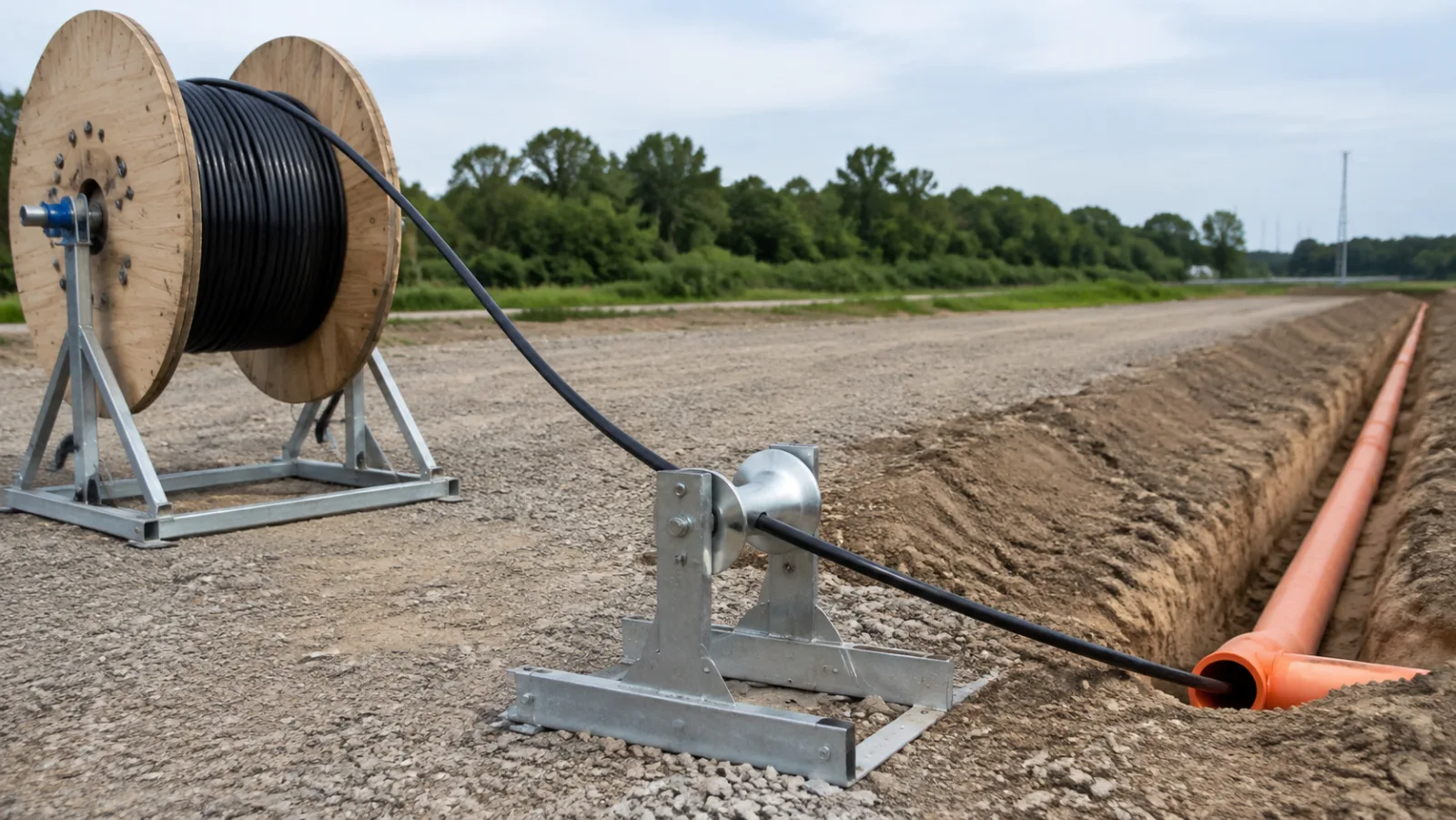
Loose tube cables are ideal for outdoor installation because they can withstand pulling tensions and environmental stresses. They are often installed in ducts, directly buried, or strung aerially. The gel-filled or dry water-blocking system provides protection against moisture, which is critical for long-term reliability. When installing loose tube cables, it is important to follow proper pulling techniques and avoid exceeding the maximum tensile load.
Indoor Installation
Tight buffered cables are easier to install indoors because they are more flexible and can be bent to tighter radii. They are commonly used in riser and plenum spaces, where fire safety codes require special jacket materials. Tight buffered cables can be terminated directly onto connectors, saving time and reducing the need for splice trays. However, they are not suitable for outdoor use unless they have additional protection, such as an outdoor-rated jacket.
Hybrid Installations
For campus networks that require both outdoor and indoor runs, a hybrid approach is often used. Loose tube cable is run outdoors to a building entrance, where it is spliced to a tight buffered indoor cable. This combination optimizes performance and cost.
Testing and Quality Considerations
Regardless of cable type, testing is essential to ensure network performance. Key tests include:
- Attenuation testing: Measures the loss of optical power over the cable length.
- Return loss testing: Measures the amount of light reflected back toward the source.
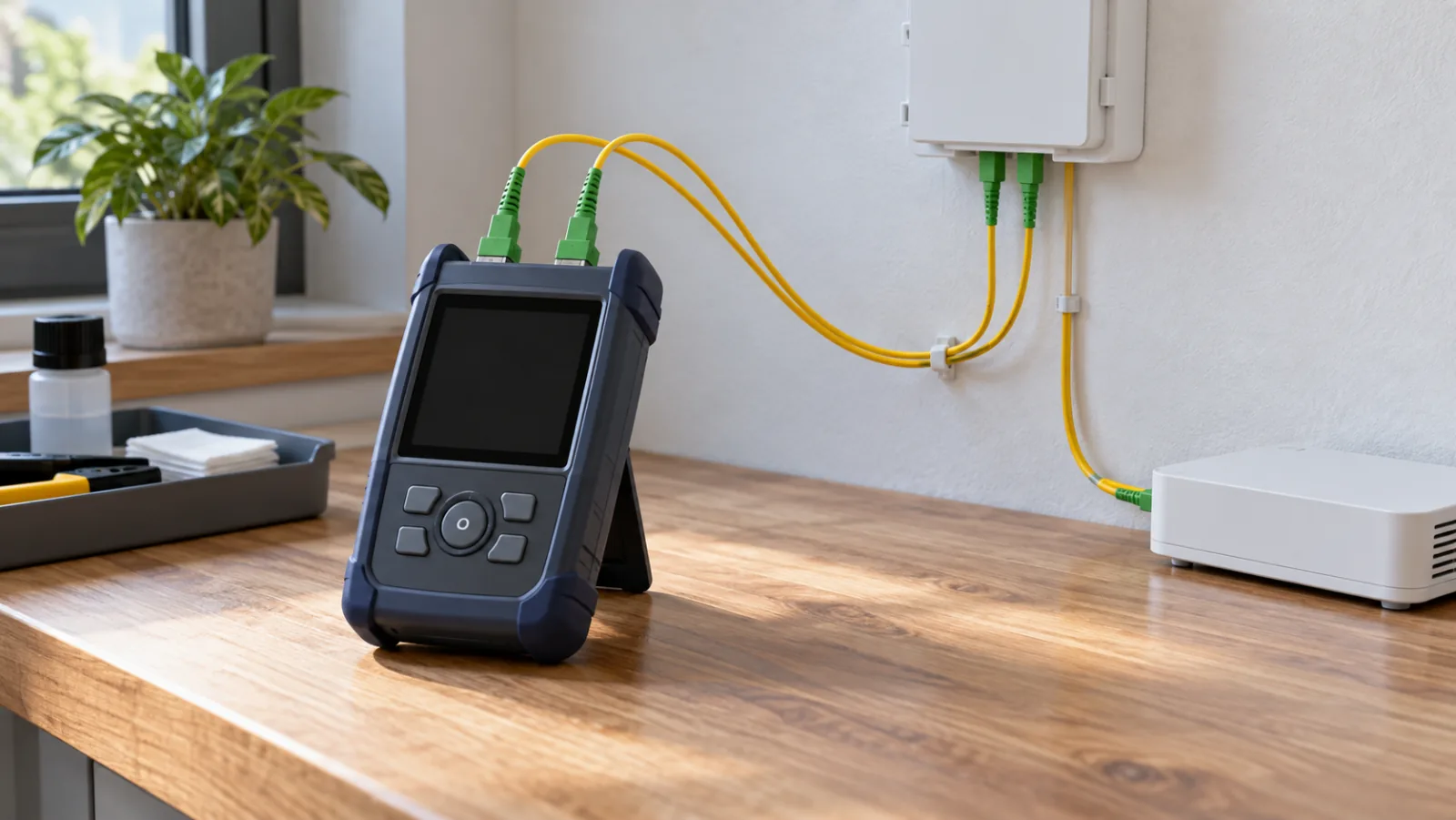
- OTDR testing: Uses an Optical Time Domain Reflectometer to locate faults and measure splice loss.
Standards such as ITU-T G.652 for single-mode fiber and IEC 60794 for optical cables define performance requirements. For example, ITU-T G.652 specifies the geometric and transmission characteristics of standard single-mode fiber. When testing, it is important to follow the Fiber Optic Association’s testing guidelines to ensure accurate results.
Quality control during manufacturing is critical. Reputable manufacturers perform 100% factory testing to ensure that the cable meets specifications. When sourcing cables, verify that the manufacturer complies with international standards and has quality certifications.
Common Mistakes to Avoid
Engineers and installers often make several mistakes when selecting or installing these cables:
- Using tight buffered cable outdoors: Without proper UV and moisture protection, tight buffered cable will degrade quickly.
- Ignoring temperature ratings: Loose tube cables are designed for extreme temperatures, but tight buffered cables may not perform well in very cold or hot environments.
- Overbending cables: Exceeding the minimum bend radius can cause micro-bends and increased attenuation.
- Improper water blocking: In loose tube cables, if the water-blocking material is not continuous, water can migrate along the cable.
- Neglecting fire codes: Indoor cables must meet local fire safety regulations, such as plenum or riser ratings.
Procurement Checklist
When purchasing fiber optic cable, use this checklist to ensure you get the right product:
- Determine the fiber type (single-mode or multimode) based on your network requirements.
- Specify the number of fibers needed, including spare fibers for future growth.
- Choose the appropriate cable construction: loose tube for outdoor, tight buffered for indoor, or a hybrid design.
- Check the operating temperature range and environmental conditions.
- Verify water-blocking features for outdoor cables.
- Ensure the cable meets relevant standards (e.g., ITU-T G.652, IEC 60794).
- Consider installation requirements such as tensile strength, crush resistance, and bend radius.
- Request datasheets and test reports from the manufacturer.
Practical Recommendations
Based on typical network scenarios, here are some recommendations:
- For outdoor long-haul or metro networks: Use loose tube cables with single-mode fiber. They are reliable and cost-effective for long distances.
- For indoor data centers and LANs: Use tight buffered cables with multimode fiber for short distances, especially where high density and easy termination are needed.
- For campus networks: Use a combination: loose tube outdoors, tight buffered indoors, with proper splicing at the transition point.
- For harsh environments: Consider armored loose tube cables for additional protection against rodents and crush.
Conclusion
Understanding the differences between loose tube and tight buffered fiber cable is essential for designing a reliable and cost-effective fiber network. Loose tube cables excel in outdoor environments with their superior moisture and temperature resistance, while tight buffered cables offer flexibility and ease of termination for indoor use. By carefully considering your installation environment, performance requirements, and budget, you can select the right cable for your project. For more information on fiber optic cables, visit our fiber optic cable product page. To ensure quality, review our quality assurance process. If you need assistance, contact our team today.
Frequently Asked Questions
What is the main difference between loose tube and tight buffered fiber cable?
The main difference is in fiber protection: loose tube cables have fibers loosely placed in water-blocked tubes, ideal for outdoor use, while tight buffered cables have a solid buffer coating directly on the fiber, making them easier to handle and terminate for indoor applications.
Can tight buffered cable be used outdoors?
Tight buffered cable is not recommended for outdoor use unless it has an outdoor-rated jacket and additional protection. It lacks the robust water-blocking and temperature resistance of loose tube cables, which are designed for harsh outdoor conditions.
Which cable type is easier to terminate?
Tight buffered cable is easier to terminate because the fiber is directly accessible with a protective buffer, allowing direct connectorization. Loose tube cable requires more preparation, such as stripping the tubes and cleaning the gel, before splicing or termination.
What are the typical applications for loose tube cable?
Loose tube cable is typically used for outdoor applications such as long-haul telecommunications, metro networks, direct burial, duct installation, and aerial deployment. It is also used in harsh environments where moisture and temperature extremes are a concern.
What are the typical applications for tight buffered cable?
Tight buffered cable is commonly used indoors, including data centers, local area networks (LANs), building backbones, and patch panel connections. It is also used for short-distance interconnections where flexibility and ease of termination are important.
How do I choose between loose tube and tight buffered cable?
Consider the installation environment: choose loose tube for outdoor and long-distance runs, and tight buffered for indoor and short-distance applications. Also factor in temperature range, moisture exposure, bend radius, termination ease, and cost.
Are there hybrid cables that combine both designs?
Yes, hybrid cables are available that combine loose tube and tight buffered sections, or they may have loose tube for outdoor and tight buffered for indoor in a single assembly. This is often used for campus networks to simplify installation.
Complete topic guide: Fiber Optic Cable Types: The Complete Selection Guide.