The specialty fiber market is quietly undergoing a transformation. Among the most talked-about segments is the double-clad fiber (DCF) assemblies market, which is projected to expand steadily through 2035. For engineers and procurement specialists, understanding where this market is heading is not just a matter of trend-watching—it directly affects component selection, supply chain strategy, and cost planning.
This article digs into the market outlook, explains the engineering fundamentals that drive demand, and offers practical guidance for buyers looking to source reliable fiber optic products wholesale.
What Is Double-Clad Fiber and Why Does It Matter?
Double-clad fiber is a specialty optical fiber with three concentric layers: a core, an inner cladding, and an outer cladding. The core carries the signal, while the inner cladding acts as a larger multimode waveguide for pump light in fiber lasers and amplifiers. This design enables high-power laser delivery while maintaining signal quality.
Key applications include:
- High-power fiber lasers for cutting, welding, and marking
- Fiber amplifiers for telecommunications and LIDAR
- Medical laser systems
- Nonlinear optics and supercontinuum generation
The market’s growth is tied to the rising adoption of fiber lasers in manufacturing, as well as advances in medical and defense technologies. According to market research (e.g., IndexBox), the compound annual growth rate (CAGR) is expected to remain healthy through 2035, driven by demand for more efficient and compact laser systems.
Engineering Trends Shaping the Double-Clad Fiber Market
Several technical developments are influencing the demand for double-clad fiber assemblies:
Higher Power and Efficiency
Fiber lasers are pushing toward kilowatt-level outputs. Double-clad fiber designs with larger cladding diameters and improved pump absorption are critical. Engineers are increasingly specifying fibers with low numerical aperture (NA) and high rare-earth doping concentrations to maximize efficiency.
Miniaturization and Integration
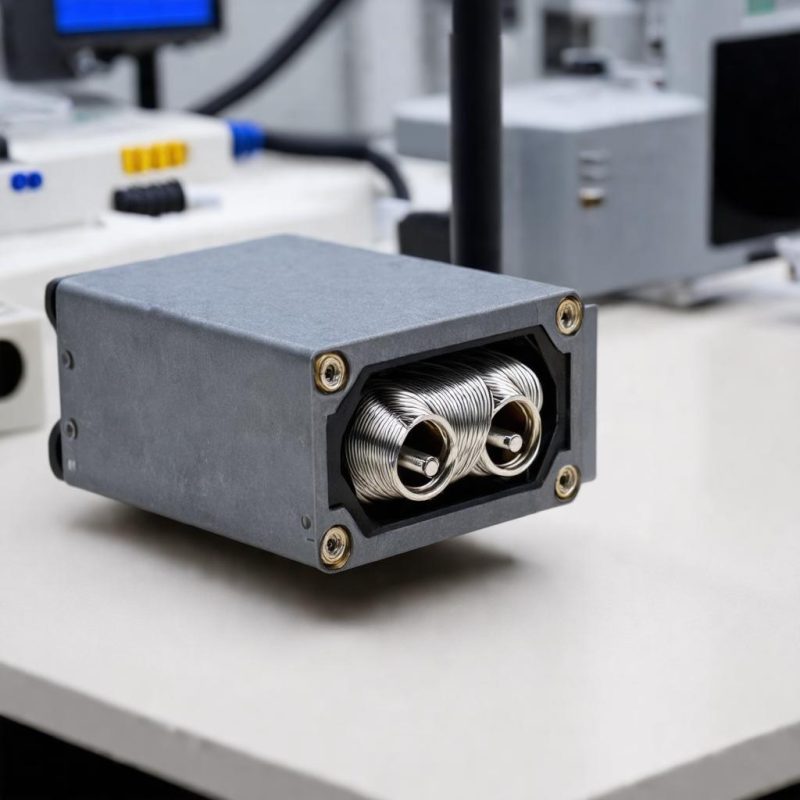
As laser systems shrink, the need for compact, integrated fiber assemblies grows. This includes pigtailed components, beam combiners, and end-caps that are pre-assembled and tested.
Reliability in Harsh Environments
Double-clad fibers are now used in aerospace, defense, and industrial settings where temperature, vibration, and radiation resistance are paramount. This drives demand for specialty coatings and ruggedized assemblies.
Customization and Low Volume Production
Unlike standard telecom fiber, double-clad fiber is often produced in smaller quantities with custom specifications. This creates unique supply chain challenges and opportunities for specialized fiber optic cable manufacturers.
Market Outlook to 2035: What Buyers Need to Know
The double-clad fiber assemblies market is expected to grow at a steady pace, with a projected CAGR of around 6-8% from 2025 to 2035, according to industry analyses. Key regional markets include North America, Europe, and Asia-Pacific, with the latter showing the fastest growth due to manufacturing expansion.
For buyers, this outlook has several implications:
- Supply chain stability: The niche nature of DCF means fewer suppliers; early engagement is key.
- Cost trends: As volumes increase, unit costs may decline, but raw material prices and specialty fabrication can offset savings.
- Lead times: Custom assemblies often require longer lead times; plan accordingly.
To stay competitive, buyers should partner with suppliers who offer both standard and custom solutions, and who can provide engineering support. For a broad range of fiber optic components, check Liqiba’s products page.
How to Select the Right Double-Clad Fiber Assemblies
Selecting the right double-clad fiber assembly requires a clear understanding of your application requirements. Here is a step-by-step guide:
- Define your optical parameters: Determine core size, NA, cladding diameter, and operating wavelength.
- Consider pump coupling: Decide how pump light will be launched—end-pumping or side-pumping—and choose the appropriate fiber geometry.
- Evaluate environmental factors: Temperature range, humidity, radiation, and mechanical stress.
- Specify connectors and terminations: Choose from SMA905, FC/PC, or custom terminations.
- Request samples: Always test a sample in your system before scaling up.
Working with a supplier that offers a wide range of optical fiber types can simplify the process.
Standards and Testing for Double-Clad Fiber
Although double-clad fiber is not covered by a single international standard like telecom single-mode fiber, several standards and recommended practices apply:
- IEC 60793: Optical fibres – Part 1: Measurement methods and test procedures.
- IEC 60794: Optical fibre cables – relevant for cable assemblies.
- ITU-T G.650.1: Definitions and test methods for single-mode fibre (provides guidance for measurement consistency).
Engineers should specify tests such as numerical aperture measurement, cladding diameter, and attenuation at the operating wavelength. For high-power applications, additional tests like power handling and fiber end-face quality are crucial.
For more on fiber quality standards, visit Liqiba’s Quality page.
Value Module: Specification Comparison for Double-Clad Fibers
To help you compare options, here is a typical specification table for common double-clad fiber designs (illustrative values – always consult the manufacturer for exact data).
| Parameter | Typical Range | Why It Matters |
|---|---|---|
| Core diameter | 10 – 25 µm | Affects mode field and signal quality |
| Inner cladding diameter | 125 – 400 µm | Determines pump acceptance |
| Numerical aperture (NA) | 0.08 – 0.22 (core), 0.46 (cladding) | Higher NA allows more pump capture |
| Attenuation at 1064 nm | ≤ 5 dB/km | Critical for high-power efficiency |
| Rare-earth doping | Yb, Er, Tm, Nd | Determines gain and wavelength |
| Proof test level | 100 – 200 kpsi | Ensures mechanical reliability |
Methodology note: The values above are illustrative, based on typical published specifications from fiber manufacturers such as Corning and Nufern. Always verify with the supplier for your specific application.
Conclusion
The double-clad fiber assemblies market is set for steady growth through 2035, driven by advances in laser technology and expanding applications. For buyers, staying informed about engineering trends and market dynamics is essential. By partnering with a knowledgeable supplier like Liqiba, you can ensure your projects have access to high-quality fiber optic products and components.
Whether you need standard patch cords, custom assemblies, or expert guidance, explore our fiber optic products wholesale catalog to see how we can support your next project.
Frequently Asked Questions
What is double-clad fiber used for?
Double-clad fiber is primarily used in high-power fiber lasers and amplifiers. Its design allows efficient coupling of pump light into the inner cladding, making it ideal for industrial cutting, welding, medical lasers, and telecommunications amplification.
How is double-clad fiber different from standard single-mode fiber?
Double-clad fiber has an additional inner cladding layer that acts as a multimode waveguide for pump light. Standard single-mode fiber has only one cladding and is designed for signal transmission, not high-power pumping.
What are the key specifications to consider when buying double-clad fiber?
Key specs include core and cladding diameters, numerical aperture, attenuation, doping type, and proof test level. Also consider the operating wavelength and environmental conditions.
Is double-clad fiber covered by international standards?
There is no single standard for double-clad fiber, but components and test methods are covered by IEC 60793 and IEC 60794. ITU-T G.650.1 provides measurement guidance for single-mode fibers that can be adapted.
How can I ensure reliability of double-clad fiber assemblies?
Choose suppliers who provide detailed test reports, use high-quality fiber, and offer ruggedized packaging. Always test samples in your actual application before large-scale procurement.
Related: Fiber Optic Installation and Gas Line Damage: Prevention and Engineering Best Practices