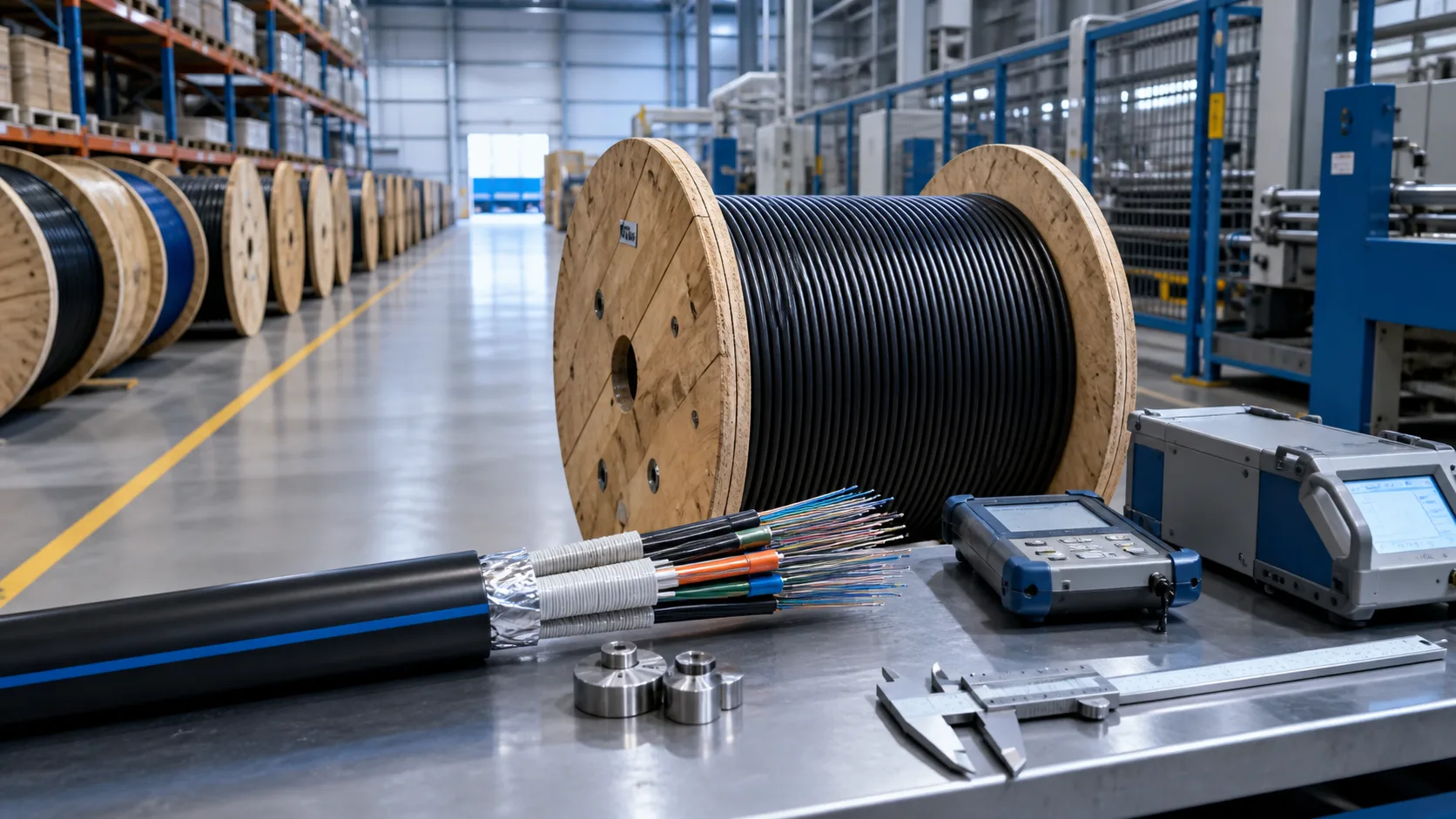
Executive summary: A long-term fiber cable supply agreement should convert a network plan into controlled production, testing and delivery obligations. Recent AI-network deals show why operators reserve material years ahead, but a reservation is useful only when the technical baseline, call-off process, lot acceptance and change control are explicit. The checklist below helps buyers reduce supply risk without accepting undocumented substitutions or unnecessary inventory.
On August 20, 2026, Zayo announced an expanded strategic supply agreement with Corning for a major portion of the cable needed for its long-haul expansion through the rest of the decade. Zayo links the agreement to a plan for 15,000 new route miles by 2030 and to material pressure created by AI infrastructure. The announcement does not disclose commercial or technical terms, so it should be read as a market signal rather than a template contract.
Why a supply agreement is different from a purchase order
A purchase order typically identifies a product, quantity, price and delivery. A framework supply agreement must also manage uncertainty. A multi-year build will change as permits, routes, electronics, funding and construction schedules move. The contract therefore needs rules for forecasts, binding call-offs, production slots, raw-material commitments, cancellations and approved alternatives.
The Zayo announcement is a useful reminder that cable availability can become a schedule constraint. It is not evidence that every buyer needs a decade-long commitment. A regional FTTH builder, metro operator and hyperscale long-haul network have different demand volatility and bargaining power.
Define the technical baseline before reserving capacity
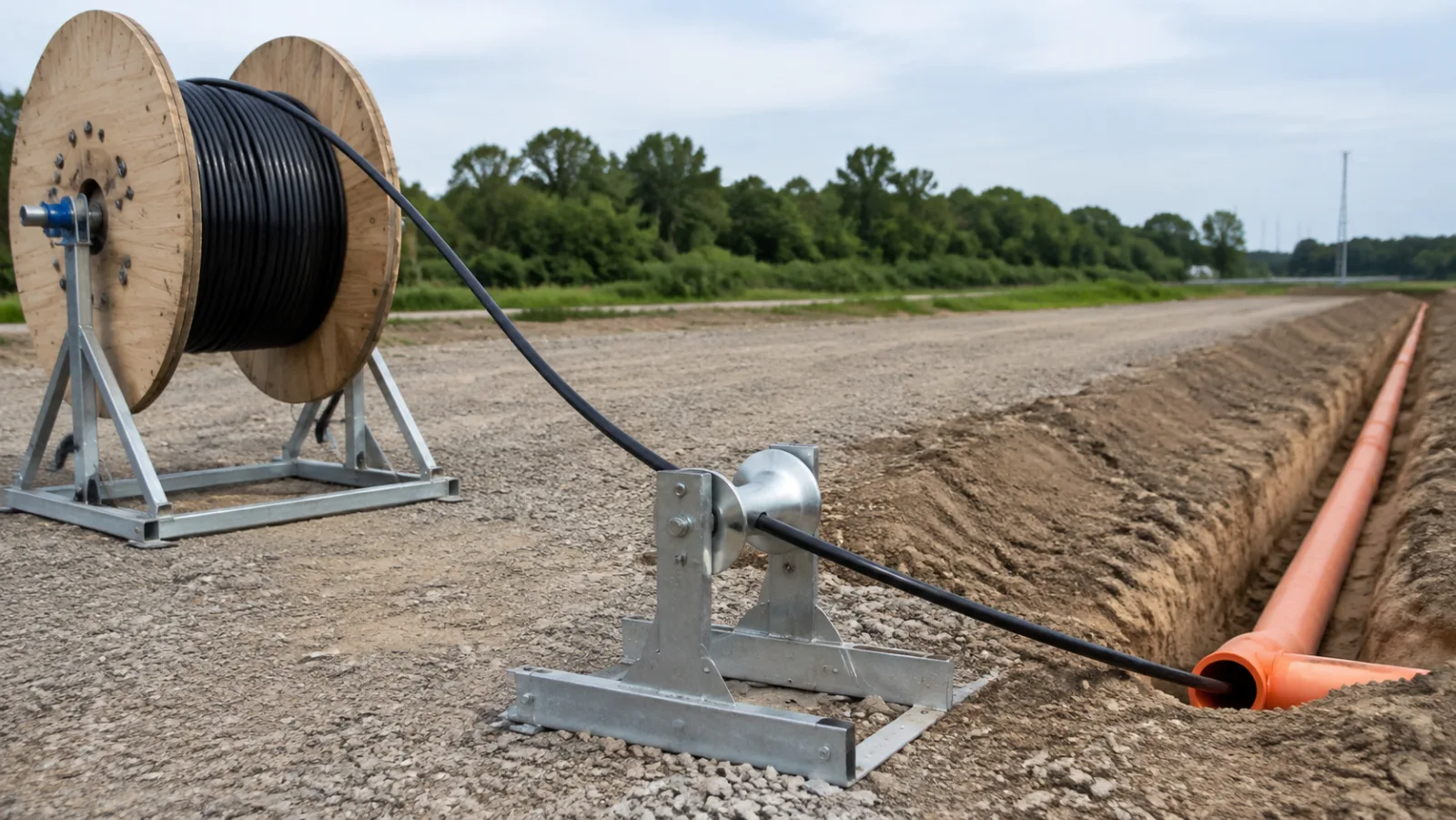
A phrase such as “288-fiber outdoor cable” is not a complete product definition. State the installation environment, cable construction, fiber category, fiber count, water blocking, armor, tensile and crush requirements, bend limits, temperature range, drum length, printing, packaging and required compliance evidence. If more than one construction may be used, give each an approved drawing and unique item code.
ITU-T G.652 (08/2024) covers geometrical, mechanical and transmission attributes of single-mode fiber and cable. It is a foundation, not a complete project specification. System engineers may need tighter maximum attenuation, chromatic-dispersion data, polarization-mode-dispersion controls or link-level statistics. The recommendation itself distinguishes fiber attributes, cable attributes and concatenated-link considerations.
For outdoor constructions, IEC 60794-3:2022 is the sectional specification for outdoor optical cables, including duct, direct-buried, aerial and several specialized applications. The project still must select the relevant detail specification and test severity. “IEC 60794 compliant” without part numbers, methods and acceptance limits is too broad for procurement.
Buyers comparing qualified sources can use the fiber optic cable supplier page as the commercial destination for drawings, construction choices and quotation inputs. The contract should reference the final approved data sheet, not a generic marketing page.
Worked demand example: calculate call-off coverage
The following calculation is illustrative. It does not represent Zayo, Corning or a Liqiba customer project. Assume a network program expects to consume 1,800 cable-km of one approved construction over 18 months. Average planned consumption is therefore 100 cable-km per month. The supplier’s confirmed replenishment lead time is four months, and the buyer wants two additional months of schedule-risk coverage.
| Input | Assumption | Result |
|---|---|---|
| Average consumption | 1,800 cable-km ÷ 18 months | 100 cable-km/month |
| Lead-time coverage | 100 × 4 months | 400 cable-km |
| Risk-buffer coverage | 100 × 2 months | 200 cable-km |
| Coverage before installation allowance | 400 + 200 | 600 cable-km |
| Installation and length allowance | 600 × 3% | 18 cable-km |
| Illustrative call-off coverage | 600 + 18 | 618 cable-km |
The number is not automatically the warehouse stock target. Some capacity can be represented by raw materials, work in progress or scheduled finished drums. The agreement should identify where ownership and risk transfer at each stage. It should also distinguish route-km from cable-km: diverse routes, slack, risers, repair loops and parallel cables can make cable demand materially higher than map distance.
Use a three-level acceptance plan
| Acceptance level | Typical purpose | Examples |
|---|---|---|
| Design qualification | Prove the construction before recurring supply | Tensile, crush, impact, temperature cycling, water penetration and application-specific environmental tests. |
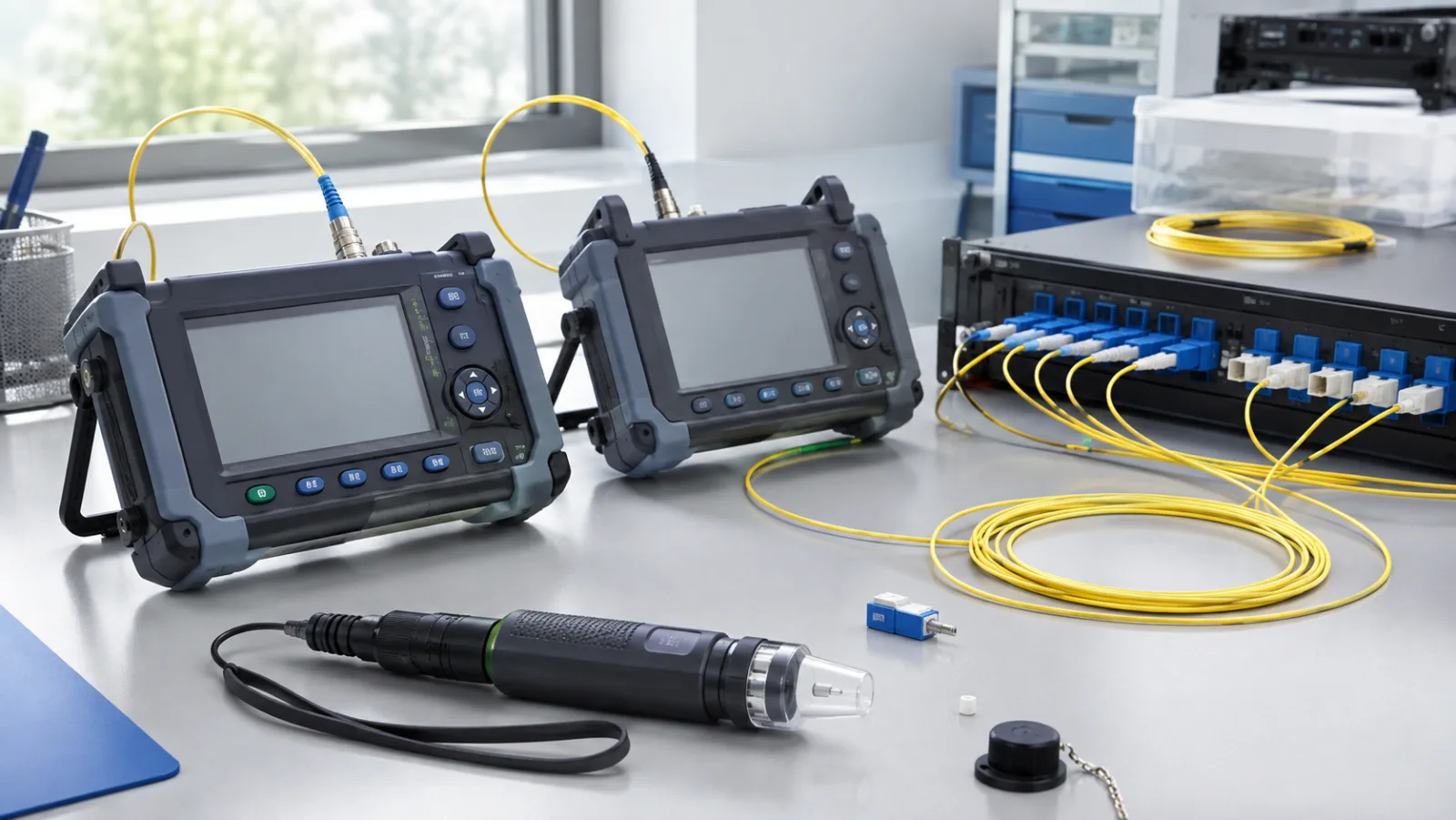
| Lot or sample verification | Detect process drift | Dimensional checks, material verification, selected mechanical tests and periodic optical sampling under an agreed plan. |
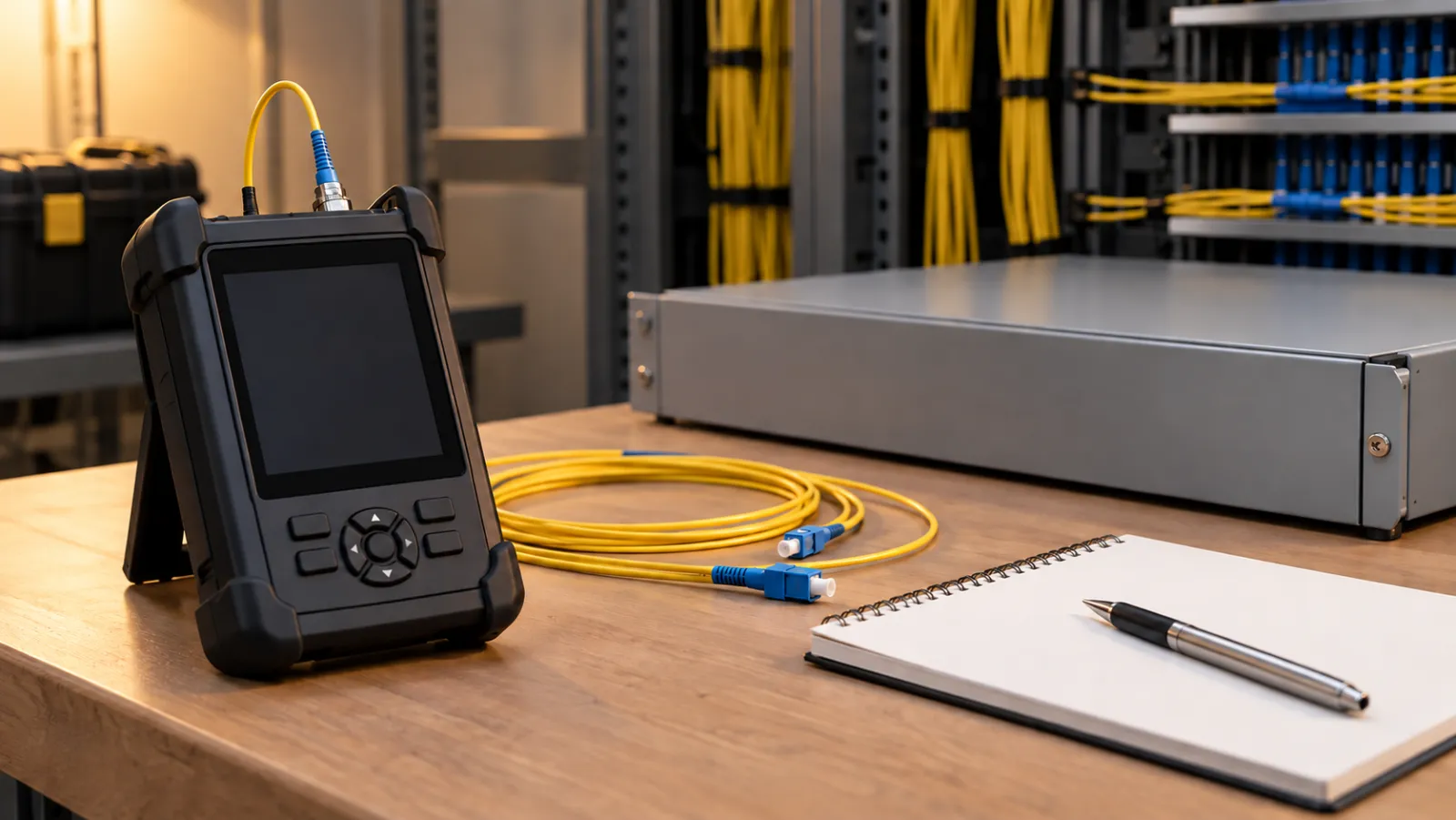
| Drum release | Establish identity and shipment condition | Drum number, cable length, fiber continuity, attenuation record, print legend, packaging inspection and certificate of conformity. |
Do not request every destructive type test on every drum; that is costly and may be physically impossible. Do not accept a one-time type-test report as the only evidence for years of shipments. The agreement should identify test frequency, sample selection, pass/fail limits, retest rules, witnessing rights and record retention.
For a deeper explanation of tensile, crush and bend evidence, see fiber cable mechanical tests explained. The IEC 60794 buyer verification guide helps translate generic standard references into test-method questions.
Control changes that can invalidate qualification
A supplier may need to change a polymer, strength member, water-blocking material, fiber source, production line or factory. Some changes are harmless; others can alter shrinkage, attenuation under stress, strippability or field handling. Establish a product-change-notification process with a minimum notice period and a risk-based requalification matrix.
At minimum, notification should identify the old and new material or process, reason, affected item codes, first changed lot, technical comparison and proposed validation. “Equivalent” must mean equivalence against agreed requirements, not only similar catalog language. Emergency substitutions should require written approval before shipment unless a narrowly defined contingency clause applies.
Link forecasts to commercial commitments
Forecasts can be rolling and nonbinding for distant months, then become binding inside a frozen window. Define the horizon, update frequency and permitted variation. For example, months one and two may be fixed, months three and four adjustable by a limited percentage, and later months planning-only. The exact model depends on production lead time and material exposure.
Include minimum drum quantities, standard lengths, partial-shipment rules, expedited-order charges and treatment of canceled custom cable. If a buyer reserves capacity but repeatedly misses call-offs, the supplier may be unable to protect the slot. If the supplier misses confirmed dates, the buyer needs escalation, recovery and allocation rules.
Qualify continuity, not just nominal capacity
Ask where critical inputs originate, which production lines are approved and what happens if one site stops. A second factory is not automatically interchangeable: it may use different equipment, materials or process controls and may need separate qualification. Review business-continuity plans without demanding disclosure of unrelated confidential information.
Specify traceability from delivered drum to manufacturing lot and fiber records. Traceability makes a targeted containment action possible if a later issue appears. Without it, one nonconforming result can force unnecessary inspection across the entire program.
Delivery and storage controls belong in the agreement
Cable can be damaged after release. Set drum orientation, flange protection, lifting points, rolling restrictions, blocking, weather protection and photographic dispatch requirements. State the delivery inspection window and how hidden damage is reported. Define storage temperature, ground clearance, sunlight exposure, moisture protection and maximum storage period.
Long-term projects should plan drum-length optimization. Random lengths create extra splices and waste; overly rigid lengths can delay production or leave unusable remnants. Provide route section lengths early, agree tolerances and require drum schedules before shipment.
Final buyer checklist
- Attach controlled drawings and data sheets for every approved construction.
- State fiber and cable standards with editions, methods and project limits.
- Separate capacity reservation, forecast, binding call-off and title transfer.
- Calculate coverage in cable-km by item code and route schedule.
- Define design, sample and drum-release acceptance evidence.
- Require product-change notification and risk-based requalification.
- Set traceability, nonconformance, corrective-action and record-retention rules.
- Document continuity sites, allocation logic and recovery escalation.
- Control drum lengths, packaging, transport, delivery inspection and storage.
- Review the agreement quarterly against actual consumption and build progress.
For supplier due diligence beyond the contract, review the factory capabilities and certification information and request project-specific evidence where needed. A strong supply agreement does not guarantee a trouble-free build, but it makes technical, schedule and commercial risk visible before the field team is waiting for cable.
Sources and verification note
This article was checked on August 31, 2026 against Zayo’s official August 20 announcement, ITU-T G.652 (08/2024) and IEC 60794-3:2022. The worked demand figures are explicitly hypothetical and should be replaced with the buyer’s approved forecast, lead time and inventory policy.
Frequently Asked Questions
What should a long-term fiber cable supply agreement lock down?
It should control the approved cable design, fiber category, materials, performance limits, test methods, documentation, change-notification period, forecast and call-off rules, lead time, packaging, traceability, nonconformance handling and continuity plan. Price and volume alone are not enough.
Is reserving production capacity the same as ordering cable?
No. A capacity reservation protects a defined manufacturing window, while a purchase order or call-off normally authorizes a specific construction, quantity and delivery. The agreement must explain when forecasts become binding and who bears unused-material or rescheduling costs.
Which fiber standard should a buyer specify for long-haul cable?
The transmission design decides the fiber category. ITU-T G.652.D is common for broad single-mode use, but long-haul coherent systems may require tighter attenuation, dispersion, PMD or bend performance than a generic category name provides. State the actual limits required by the system design.
Should every delivered drum receive the same tests?
Every drum should have identity and routine release records, but destructive or long-duration type tests are normally applied by design qualification or sampling plan. Define routine, sample and type tests separately so neither party assumes the wrong acceptance scope.
How much safety stock should a fiber project hold?
There is no universal percentage. Calculate coverage from consumption variability, replenishment lead time, route criticality, minimum order quantity, repair needs and storage limits. Express the result in cable-kilometres by construction, not only route-kilometres or total project value.