Summary: The useful answer to how many spare fibers for a campus backbone starts with a service map. Count active strands, assign known expansion, reserve capacity for restoration and maintenance, and then choose a purchasable cable size. Spare fibers must have an owner, a documented purpose and a known activation condition to be useful during an outage.
A rule such as “add 25 percent” can hide major differences between campuses. One route may be easy to recable next year, while another crosses a road that will be inaccessible for a decade. One application may need duplex pairs, another approved single-fiber optics, and another a dedicated monitoring strand.
Count circuits before counting glass
List each endpoint pair and its required interface. For conventional duplex services, count two strands per circuit; for a verified single-fiber service, count one. Parallel-optics or other specialized applications need their actual strand count. Avoid using the number of switch ports as a proxy unless every port has the same physical interface.
Record which cable segment each circuit traverses. If three buildings share an initial backbone section and then branch apart, the common section carries the combined allocations. The branch sections do not necessarily need the same fiber count. Design segment by segment, preserving continuity through every closure and panel.
Separate four different reserves
| Allocation | Purpose | Activation condition |
|---|---|---|
| Committed growth | Known upcoming services | Approved project or scheduled expansion |
| Restoration reserve | Recover from selected strand or termination faults | Incident procedure authorizes reassignment |
| Maintenance or test use | Temporary changes, monitoring or verification | Defined change window or test procedure |
| Unassigned capacity | Remaining allowance after selecting cable size | Design owner approves new use |
The FOA restoration guide recommends spare fibers and clear documentation because they can assist recovery from failures at terminations and splice locations. That supports maintaining a usable reserve; it does not prescribe a universal count or guarantee recovery from every incident.
Define whether growth fibers may temporarily support restoration. If they can, specify who authorizes the change and when replacement capacity must be provided. Otherwise a spare pair borrowed during an outage can quietly become permanent, leaving a future project with a paper allocation but no available path.
Worked example: selecting a 48-fiber backbone
Assume a fictional campus segment with six active duplex Ethernet circuits, two active approved single-fiber circuits and a three-year growth plan. The owner also requires restoration capacity for three duplex circuits and two dedicated test strands. The following numbers are planning choices, not a standard or a Liqiba customer case.
| Requirement | Calculation | Strands |
|---|---|---|
| Active duplex services | 6 × 2 | 12 |
| Active single-fiber services | 2 × 1 | 2 |
| Planned duplex growth | 4 × 2 | 8 |
| Planned single-fiber growth | 2 × 1 | 2 |
| Restoration reserve | 3 × 2 | 6 |
| Dedicated test allowance | 2 × 1 | 2 |
| Total assigned requirement | 12 + 2 + 8 + 2 + 6 + 2 | 32 |
| Illustrative selected cable size | Supplier-confirmed 48-fiber construction | 48 |
| Unassigned capacity | 48 − 32 | 16 |
Day-one active usage is 14 of 48 strands, or 29.2 percent. It would be misleading to describe the other 34 strands as freely available: ten are assigned to growth, six to restoration and two to testing. Only sixteen remain unassigned under this plan.
A hypothetical 24-fiber option cannot cover the 32-strand requirement. A 36-fiber construction, if available and otherwise suitable, would leave four unassigned strands. The 48-fiber choice offers sixteen, but its price, cable diameter, termination hardware and installation limits still require comparison. Fiber count alone does not decide the purchase.
Turn the calculation into an allocation map
One possible allocation is strands 1–12 for active duplex circuits, 13–14 for active single-fiber circuits, 15–24 for planned growth, 25–30 for restoration, 31–32 for tests and 33–48 unassigned. This numbering is illustrative; adapt it to the actual tube structure, color sequence and panel organization.
Document every splice transition. A strand numbered 25 in one cable does not have to continue as 25 in another, but the mapping must be explicit. The reserve works only if it forms a continuous usable path between the required endpoints.
Review growth without double counting protection
Run a second scenario in which the growth plan adds six duplex circuits instead of four. That adds four strands, taking the assigned requirement to 36 and leaving twelve unassigned in a 48-fiber cable. This simple sensitivity check shows how a decision changes when a business forecast changes.
Also ask whether protected services require capacity on a separate route. Spare glass inside the same sheath cannot protect against severing that sheath. Shared ducts, bridges, building entrances and equipment rooms can create common failure points even when two cables have different labels.
The FOA guidance for project planners discusses designing for future expansion, including spare duct opportunities. Treat pathway capacity as a separate resource from spare fibers: one supports future cable placement, while the other can support activation within the existing cable.
Choose how much reserve should be ready to patch
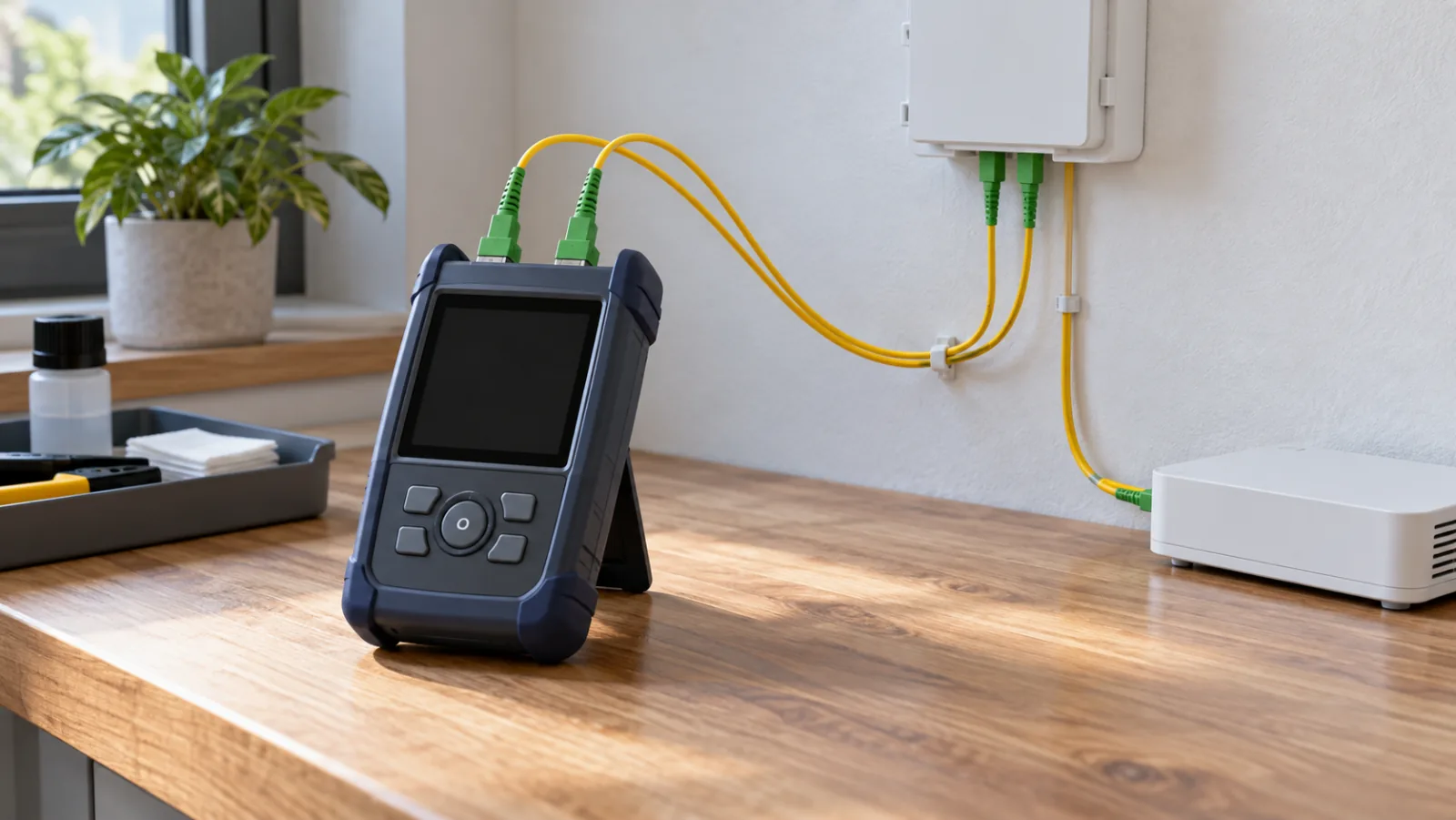
For a short restoration target, reserve strands may need termination, inspection and accepted optical results at both ends before an incident occurs. A coiled bare spare inside a closure still requires access and splice work. Price those two activation states separately instead of calling both “available.”
Include panel positions, splice trays, pigtails, adapters and cabinet space in the bill of materials. A cable with unused glass but no compatible termination capacity can delay expansion. Our fiber cable selection guide covers construction choices, and the single-mode fiber optic cable page provides the commercial route for a segment-specific quotation.
Evaluate what each spare can actually restore
A spare strand can help when an individual fiber or termination becomes unusable and the rest of the cable remains intact. It may not help when a closure is inaccessible, the whole cable is damaged or the active equipment has failed. Associate reserve capacity with the failure cases it is intended to address so the service owner understands its limits.
In the example, three reserved duplex pairs do not necessarily restore every possible three-circuit outage. They must reach the correct endpoints, have compatible fiber characteristics and satisfy the required optical budgets. If the circuits terminate at different buildings, reserve capacity should be checked on each segment and at every branching point.
Price the complete activation cost
Compare cable supply, installation effort, termination labor, panel capacity and testing as a package. A larger cable may have a modest supply increment but require a different closure or installation method. Conversely, delaying termination can save initial work while extending the time needed to activate future services. State the activation target before choosing between these options.
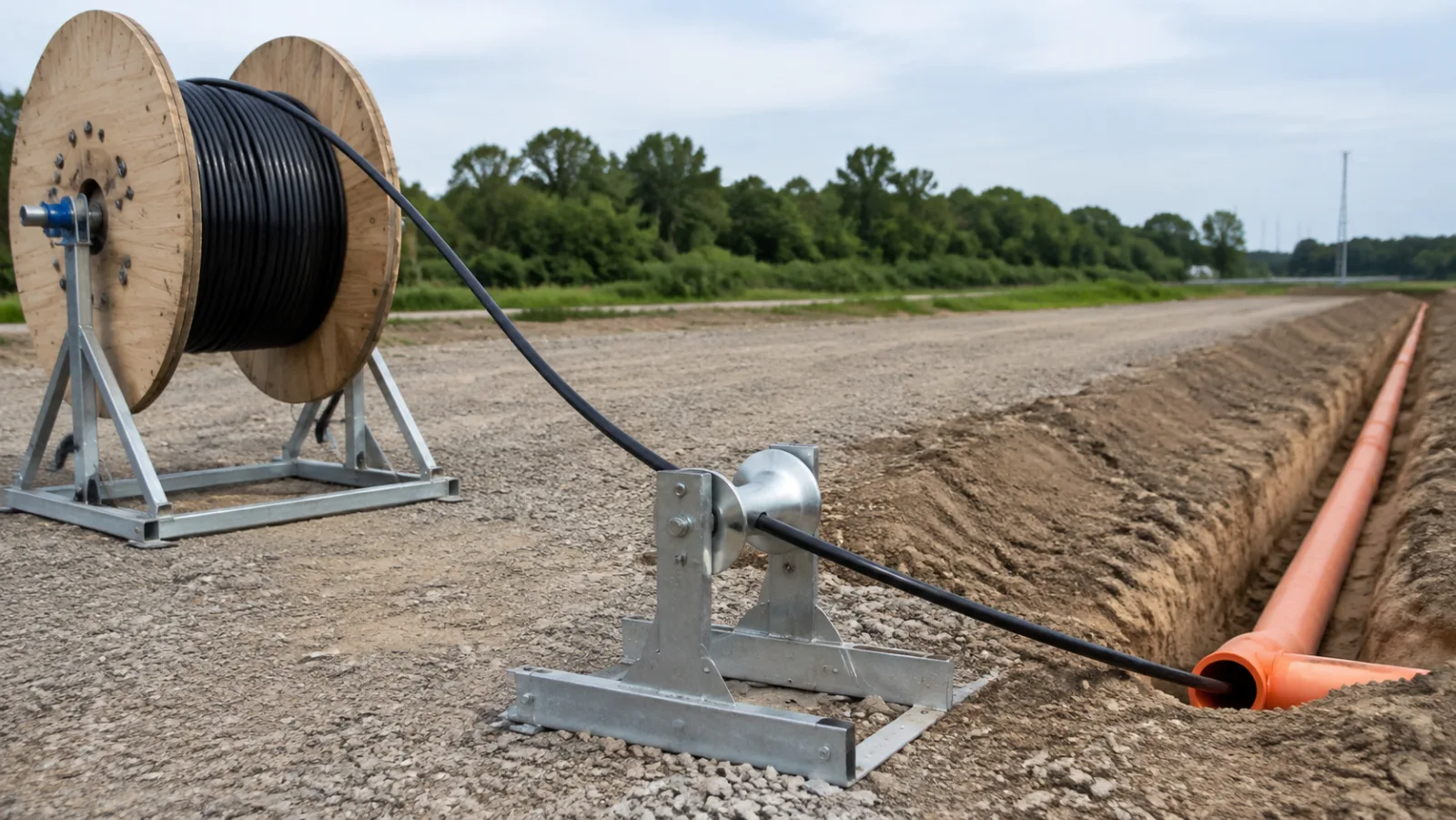
Ask the supplier for the exact construction offered at each candidate count. Compare maximum outside diameter, loaded bend radius, pulling limit, environmental rating and drum-length availability. Do not assume that moving from one fiber count to another preserves the same cable construction and handling requirements.
The purchase review should end with a named decision owner and a forecast review date. If a new building or application changes the demand before installation, rerun the allocation instead of relying on an earlier percentage. That keeps the reserve tied to the campus plan rather than an outdated bill of materials.
Keep the reserve accurate after handover
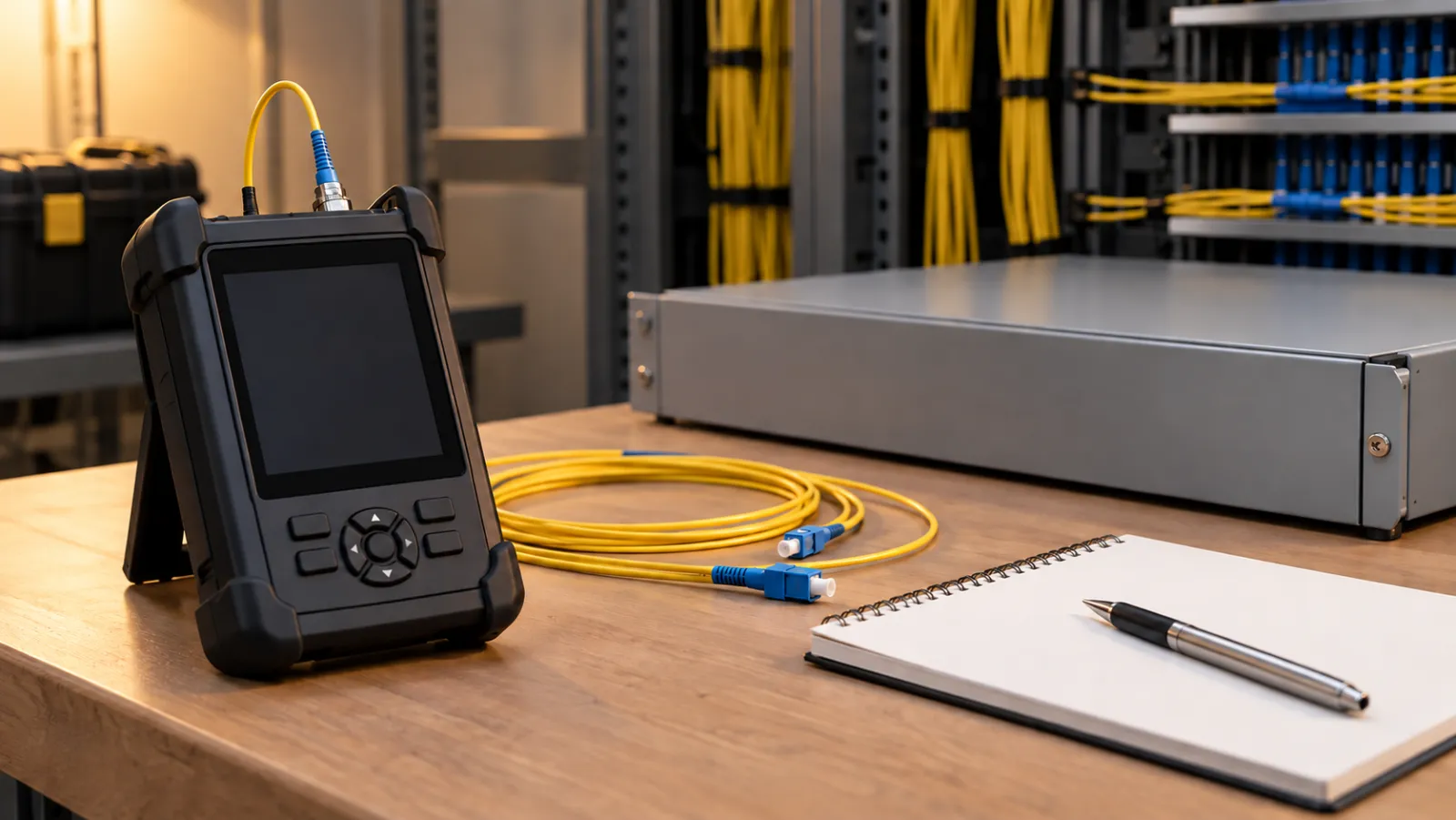
Maintain a ledger with strand identity, endpoints, allocation owner, test record, status and last change date. Distinguish dark but assigned fibers from unassigned fibers, and defective strands from usable reserves. A spreadsheet count without these distinctions can overstate capacity during an urgent repair.
Review the ledger after every circuit activation, closure re-entry and restoration. Our troubleshooting and maintenance guide provides broader operating context. The reserve policy should require both updating the documentation and replenishing any minimum restoration capacity consumed by permanent changes.
The final purchase decision should be reproducible: a reviewer can see the demand assumptions, strand allocation, cable-size options and remaining capacity. That is more useful than a percentage with no explanation of which future service or failure the spare fibers are meant to support.
Frequently Asked Questions
Is there a universal spare-fiber percentage?
No. Size the reserve from the actual services, growth horizon, restoration objective and installation constraints. A percentage can document a policy, but it cannot replace a strand-by-strand allocation.
Do spare strands in the same cable provide route diversity?
No. A cable or duct cut can affect both active and spare strands. Physical route diversity requires an appropriately independent path, with shared failure points explicitly reviewed.
Should all spare fibers be terminated immediately?
It depends on the restoration target and budget. Ready-to-patch reserves need termination and verification, while future growth fibers can follow a staged plan if their identity, condition and activation work are documented.
Can planned future strands also count as repair reserve?
Only if the policy explicitly permits that temporary use and explains how the reserve will be restored. Counting the same strand twice without a release rule overstates available capacity.
Does moving to BiDi automatically halve the required cable count?
No. It can reduce strands for compatible services, but the design must include module pairing, host support, future interfaces and restoration policy. Model the approved service architecture instead of assuming every circuit uses one strand.